


What's Happening?
Arduino has launched a new edge AI development platform named Ventuno Q, designed to support robotics, vision systems, and other physical AI applications. The platform is built around Qualcomm's Dragonwing IQ8 Series processors, combining high-performance
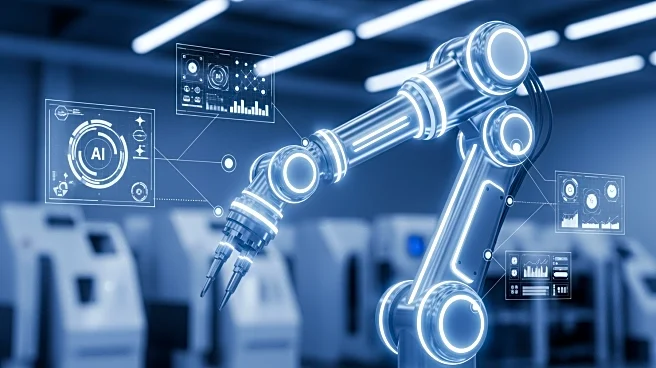
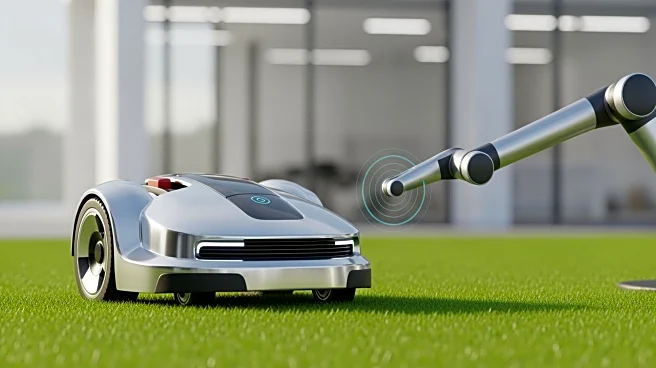
AI computing with a real-time microcontroller for precise hardware control. This development aims to enable developers to create intelligent systems capable of perceiving their surroundings, making decisions, and acting in the physical world without relying on cloud computing. The Ventuno Q platform features a dual-processor architecture, including a neural processing unit capable of delivering up to 40 TOPS of AI performance. It supports a wide range of applications, such as vision-guided robotic arms and AI-powered security systems, and is compatible with existing Arduino hardware.
Why It's Important?
The introduction of the Ventuno Q platform marks a significant advancement in making edge AI more accessible and powerful. By enabling AI processing at the edge, this platform reduces the dependency on cloud computing, which can lead to faster decision-making and reduced latency in AI applications. This is particularly important for industries that require real-time processing, such as robotics and autonomous systems. Additionally, the platform's compatibility with existing Arduino hardware allows for seamless integration into current systems, promoting innovation and experimentation in AI development. The collaboration with Qualcomm further enhances the platform's capabilities, potentially leading to a surge in creative and innovative solutions in the AI and robotics fields.
What's Next?
Arduino plans to make the Ventuno Q platform available in the second quarter of 2026 through its store and authorized distributors. As the platform becomes available, developers and researchers are expected to explore its potential in various applications, from industrial automation to educational tools. The platform's ability to run AI models locally could lead to new developments in offline AI systems, reducing the need for constant internet connectivity. This could also drive advancements in areas such as autonomous vehicles, smart home devices, and personal robotics, where real-time processing and decision-making are crucial.