
What's Happening?
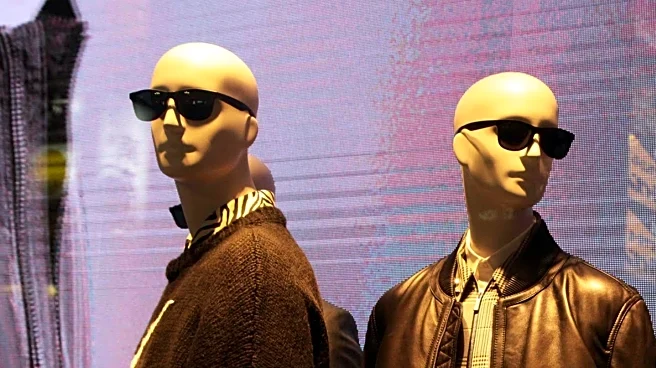
The Pitti Uomo trade fair in Florence highlighted the diverse and often contrasting styles in menswear fashion. The event featured a variety of fashion tribes, from 'goths' to 'sneakerheads,' each showcasing
their unique sartorial codes. A notable highlight was the 'suit walk,' where formally dressed men paraded through the streets, emphasizing traditional gentlemanly attire. The event also featured innovative installations, such as Marc Leschelier's 'Ancient/New Site,' which contrasted with the traditional fashion displays. Designers like Hed Mayner and Soshi Otsuki presented collections that challenged conventional tailoring with abstract shapes and nostalgic influences, respectively.
Why It's Important?
Pitti Uomo serves as a significant platform for exploring the evolving landscape of menswear fashion. The event underscores the ongoing tension between traditional and modern styles, reflecting broader societal shifts in identity and expression. Designers like Hed Mayner and Soshi Otsuki are pushing the boundaries of menswear, offering fresh perspectives that could influence future fashion trends. This diversity in fashion not only caters to a wider audience but also encourages innovation within the industry, potentially impacting global fashion markets and consumer preferences.
What's Next?
As designers continue to experiment with new forms and styles, the fashion industry may see a shift towards more inclusive and diverse representations of masculinity. The success of avant-garde collections at Pitti Uomo could inspire other designers to explore unconventional approaches, potentially leading to a broader acceptance of varied fashion expressions. Additionally, the industry's response to these trends will likely influence future trade fairs and fashion weeks, setting new standards for creativity and innovation in menswear.
Beyond the Headlines
The juxtaposition of traditional and modern styles at Pitti Uomo highlights a cultural dialogue about masculinity and identity. As fashion becomes a medium for expressing individuality, the industry must navigate the balance between honoring heritage and embracing change. This dynamic could lead to a reevaluation of fashion norms and the role of clothing in personal and cultural identity, fostering a more inclusive and diverse fashion landscape.