






What's Happening?
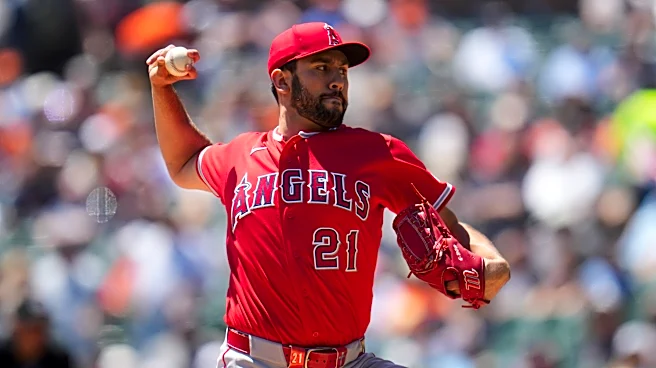
The Los Angeles Angels are facing criticism following statements by their general manager, Perry Minisian, who claimed the team is 'very competitive' and that their 'best baseball is in front of us.' This assertion comes despite the Angels having the worst
run differential and record in Major League Baseball (MLB) after being swept by the Dodgers with a combined score of 31-3. Critics argue that the team's performance contradicts the general manager's optimistic outlook. Additionally, the Angels' lack of coverage by their hometown newspaper, which does not assign a full-time writer to their games, underscores their perceived irrelevance in Southern California. Despite these challenges, the Angels' TV and radio broadcast teams are praised for their professionalism and positive attitude, even as the team endures its tenth consecutive losing season.
Why It's Important?
The situation with the Los Angeles Angels highlights broader issues within professional sports teams regarding management expectations versus on-field performance. The disconnect between the general manager's statements and the team's actual performance could impact fan engagement and attendance, as well as the team's reputation in the league. The lack of media coverage from local outlets further emphasizes the team's struggle to maintain relevance in a competitive sports market like Southern California. This scenario also reflects the challenges sports teams face in balancing public relations with the realities of their performance, which can affect sponsorships, merchandise sales, and overall brand value.
What's Next?
The Angels will need to address both their on-field performance and public perception to regain competitiveness and relevance. This may involve strategic changes in management, player acquisitions, or adjustments in team strategy. The team's management might also consider engaging more with local media to improve coverage and fan interaction. As the season progresses, the Angels' ability to turn around their performance will be crucial in determining their future direction and success.
Beyond the Headlines
The Angels' situation raises questions about the role of sports management in shaping team culture and expectations. The apparent disconnect between management's statements and the team's performance could lead to internal evaluations and potential restructuring. Additionally, the team's struggles highlight the importance of media relations in maintaining a sports franchise's public image and fan base. The ongoing challenges faced by the Angels may also prompt discussions about the broader economic and cultural impact of sports teams in their local communities.