



What's Happening?
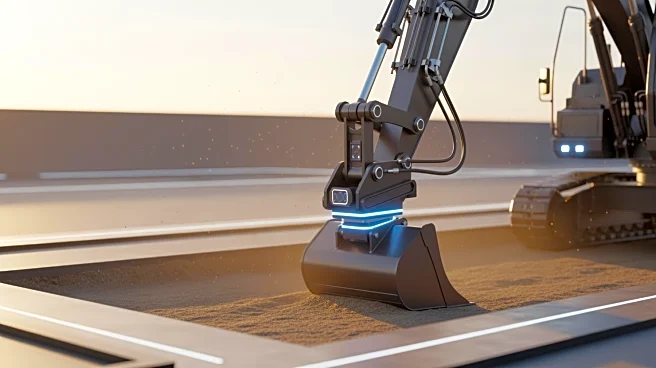
Bedrock Robotics Inc., a company specializing in autonomous construction equipment, has raised $270 million in Series B funding, bringing its total funding to over $350 million. This investment will accelerate the development of operator-less excavators, aiming to transform construction practices by deploying autonomous machines and connected fleets. The company, which emerged from stealth in July 2025, is working towards its first fully operator-less deployments later this year. The funding round was led by CapitalG and the Valor Atreides AI Fund, with participation from several other investors, including NVIDIA's venture capital arm. Bedrock plans to use the funds to enhance its technology, expand its team, and increase its geographical footprint.
Why It's Important?
The advancement of autonomous construction equipment by Bedrock Robotics represents a significant shift in the construction industry, which faces a growing demand for infrastructure development and a shortage of skilled labor. By automating tasks traditionally performed by human operators, Bedrock aims to improve productivity and safety on construction sites. This innovation could lead to cost savings and efficiency gains for contractors, potentially reshaping the industry's labor dynamics. The successful deployment of operator-less excavators could also pave the way for broader adoption of autonomous technologies in other sectors, further driving the integration of AI and robotics in everyday operations.
What's Next?
Bedrock Robotics plans to deploy its first operator-less excavators later this year, marking a milestone in autonomous construction technology. The company will focus on solidifying the robustness and versatility of its systems, with a long-term goal of scaling its capabilities and volume. As the technology matures, Bedrock aims to become a major ecosystem provider, leveraging existing networks to manage and deploy autonomous machines. The company is also expanding its leadership team to support its growth and development efforts, positioning itself to capitalize on the increasing demand for autonomous solutions in the construction industry.