



What's Happening?
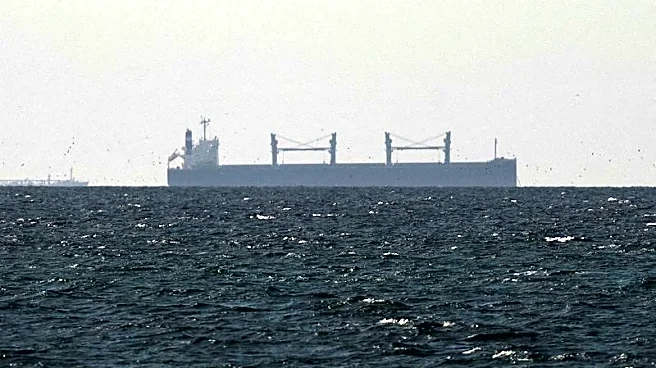
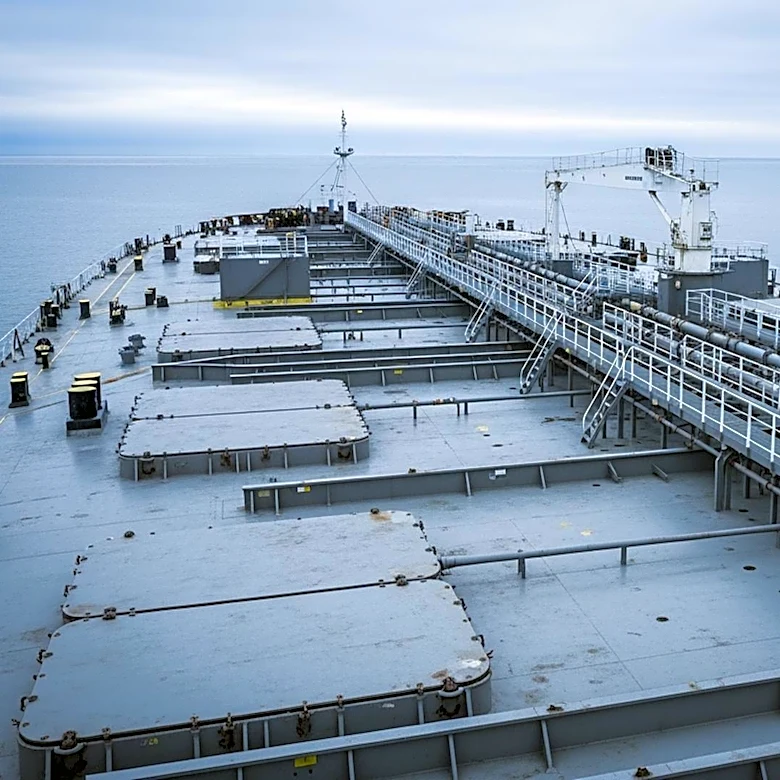
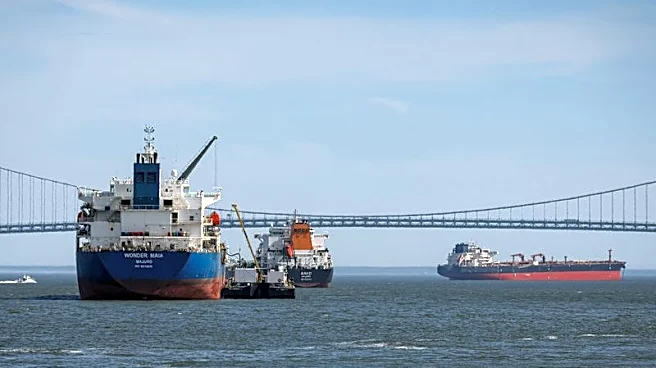
Following Iran's declaration that the Strait of Hormuz is open to commercial traffic, oil prices have dropped significantly. Brent futures have decreased to around $90 a barrel, and U.S. crude is now under $85 a barrel. This has led to expectations that gasoline
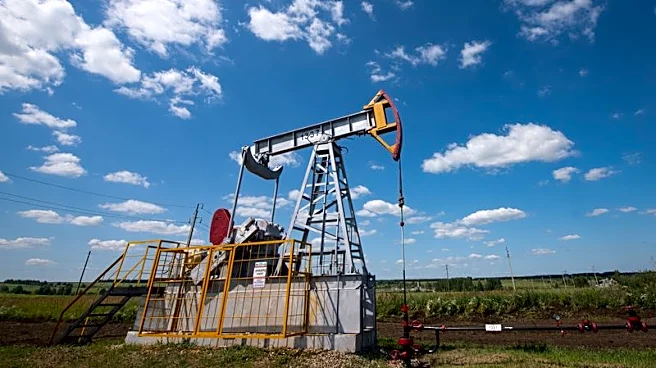
prices, currently above $4 per gallon, could fall below $4 as early as this weekend, with further reductions to $3.65 to $3.85 per gallon anticipated in the next few weeks. The rapid response in wholesale gasoline markets is unusual, but individual gas stations may take longer to adjust prices due to existing high costs. The reopening of the Strait of Hormuz has provided immediate relief, but the full recovery of oil markets will take time due to damage to infrastructure and delayed production in the Middle East.
Why It's Important?
The anticipated drop in gasoline prices is crucial for U.S. consumers who have been burdened by high fuel costs amid Middle East tensions. Lower prices at the pump could lead to increased disposable income for households and reduced operational costs for businesses, potentially stimulating economic activity. However, the situation remains fragile, and any renewed conflict in the Middle East could disrupt oil supplies and drive prices back up. The long-term impact on the U.S. economy will depend on the stability of oil markets and the resolution of geopolitical tensions.
What's Next?
As oil prices stabilize, gasoline prices are expected to decrease gradually, providing relief to consumers. However, a complete return to pre-conflict price levels may take several months, as the oil industry recovers from infrastructure damage. The U.S. government and international partners may continue to monitor the situation and take measures to ensure market stability. Consumers should remain vigilant for potential price fluctuations due to ongoing geopolitical developments.