
What's Happening?
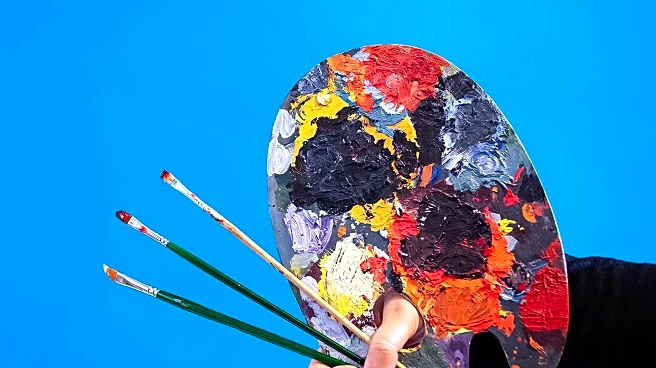
Fernando Dávila, a 72-year-old artist based in Florida, has gained recognition for his vibrant paintings despite being colorblind. Originally from Colombia, Dávila struggled with color differentiation
from a young age, which led to challenges in his early art education. However, he has overcome these obstacles to become an established artist with exhibitions across South America, Europe, and the United States. Dávila initially painted in black and white until his 30s, when he began using specially designed glasses that help him distinguish colors more effectively. These glasses, developed by a New York ophthalmologist, allow him to perceive nearly two-thirds of the color spectrum, enhancing his ability to create colorful art. Dávila's work often features romantic themes and landscapes, with a notable use of blue as a foundational color.
Why It's Important?
Dávila's story highlights the intersection of art and technology, demonstrating how adaptive tools can enable individuals with disabilities to pursue their passions and contribute to cultural and artistic fields. His success challenges perceptions of limitations associated with colorblindness, showcasing the potential for innovation to bridge gaps in artistic expression. Dávila's achievements also underscore the importance of inclusivity in the arts, inspiring others with similar challenges to explore creative avenues. His recognition, including the 'Order of Democracy' from the Colombian Congress, reflects the broader societal value placed on diverse artistic contributions.
What's Next?
Dávila continues to work from his studio in Florida, where he remains dedicated to his craft. As he progresses, there may be opportunities for further exhibitions and collaborations that could expand his influence in the art world. His ongoing work could inspire technological advancements in adaptive tools for artists with disabilities, potentially leading to new developments in the field. Additionally, Dávila's story may encourage educational institutions and art programs to incorporate more inclusive practices, supporting artists with diverse needs.
Beyond the Headlines
Dávila's journey raises important questions about the role of accessibility in the arts and the potential for technology to enhance creative expression. His use of specialized glasses illustrates how adaptive technologies can transform personal limitations into unique artistic perspectives. This case also highlights the cultural and familial dimensions of colorblindness, as Dávila's condition is shared by several family members, adding a personal layer to his artistic narrative. His work serves as a testament to the resilience and adaptability of artists facing physical challenges.