



What's Happening?
The Seattle Mariners are navigating their future pitching strategy with financial prudence, as highlighted by ESPN MLB Insider Buster Olney. The Mariners are considering how to manage their roster of pitchers, including Logan Gilbert, Luis Castillo, and
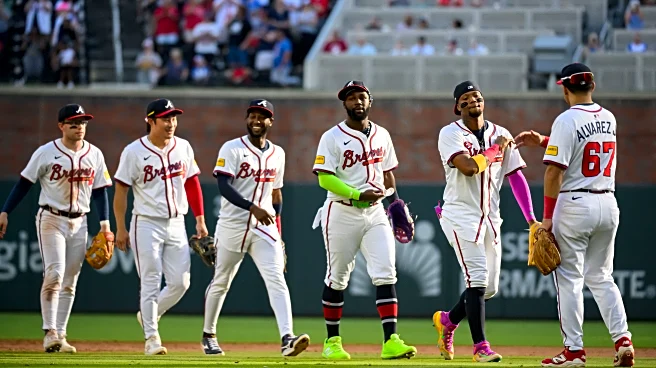
George Kirby, who are set to become free agents after the 2027 or 2028 seasons. The team is evaluating whether to extend contracts, trade, or let these players walk in free agency, influenced by the development of prospects Kade Anderson and Ryan Sloan. Anderson, ranked as the No. 21 prospect by MLB.com, recently made his professional debut, which is seen as integral to the Mariners' future plans. Olney compares the Mariners' approach to that of the Atlanta Braves, who have historically avoided paying top free agent dollars, opting instead for team-friendly deals.
Why It's Important?
The Mariners' approach to managing their pitching roster is significant as it reflects broader trends in Major League Baseball where teams are increasingly cautious about high payrolls. By focusing on developing young talent like Anderson and Sloan, the Mariners aim to maintain competitiveness without overspending. This strategy could impact their ability to retain key players and shape their future success. The comparison to the Braves, who have successfully managed their roster with financial discipline, suggests that the Mariners could achieve similar results if they effectively balance talent development with strategic financial decisions.
What's Next?
The Mariners will continue to monitor the progress of their young pitchers, Anderson and Sloan, as they consider future roster decisions. The team may engage in trade talks or contract negotiations as the free agency dates for Gilbert, Castillo, and Kirby approach. Stakeholders, including fans and analysts, will be watching closely to see how the Mariners balance their financial strategy with the need to remain competitive in the league.
Beyond the Headlines
The Mariners' strategy highlights a shift in MLB towards valuing player development and financial sustainability over high-profile acquisitions. This approach could influence other teams facing similar financial constraints, potentially leading to a more balanced competitive landscape. Additionally, the focus on young talent development may encourage investment in scouting and training programs, fostering a new generation of players.