







What's Happening?
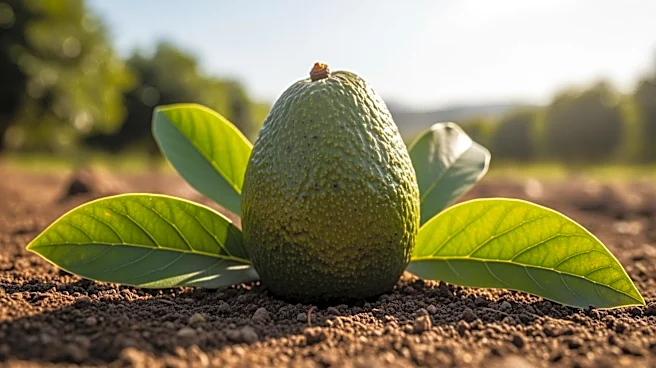
FarmTogether has introduced its first avocado-focused investment, Riviera Avocado Grove, located in the coastal foothills of Santa Barbara County, California. This region is renowned for its favorable climate and consistent growing conditions, making
it a prime location for avocado production. The investment is structured as a 10-year hold, aiming for a 10.5% net internal rate of return and a 9.3% net cash yield. It is available as both a crowdfunded investment and a tenancy-in-common structure, potentially eligible for 1031 exchanges. The launch comes as U.S. avocado consumption continues to rise, while domestic supply faces constraints due to geographic and water limitations. FarmTogether's approach focuses on disciplined underwriting, operational partnerships, and long-term asset management.
Why It's Important?
The introduction of Riviera Avocado Grove by FarmTogether highlights the increasing demand for avocados in the U.S., driven by consumer preferences and limited domestic supply. This investment taps into the high-value permanent cropland segment, offering potential income and long-term value. The reliance on imports to meet avocado demand underscores the strategic importance of domestic production. By investing in high-quality avocado assets in California, FarmTogether positions itself to benefit from the growing market while addressing supply constraints. This move could influence other investors to explore similar opportunities in permanent crops, potentially reshaping the agricultural investment landscape.
What's Next?
As FarmTogether expands its farmland investment platform, the success of Riviera Avocado Grove could lead to further investments in high-value permanent crops across key U.S. regions. The firm's focus on disciplined underwriting and operational partnerships may attract more investors seeking stable returns in agriculture. Additionally, the ongoing demand for avocados might prompt other agricultural firms to explore similar investments, potentially increasing domestic production and reducing reliance on imports. Stakeholders, including local operators and investors, will likely monitor the performance of this investment closely to assess its impact on the broader agricultural market.