









What's Happening?
Qcells, a U.S. branch of the Korea-headquartered company, has expanded its solar manufacturing operations in Cartersville, Georgia. The facility is now a vertically integrated solar factory, producing solar ingots, wafers, and cells at a rate of 3.3 gigawatts
per year. This expansion makes it the first and only such facility in the U.S. The Cartersville plant, along with an expanded factory in Dalton, Georgia, will increase Qcells' total production capacity to 8.6 gigawatts annually. This development is part of a broader trend of increasing domestic solar manufacturing, supported by U.S. tax incentives that favor domestic content. The facility's full capacity is expected to be reached by the third quarter of the year.
Why It's Important?
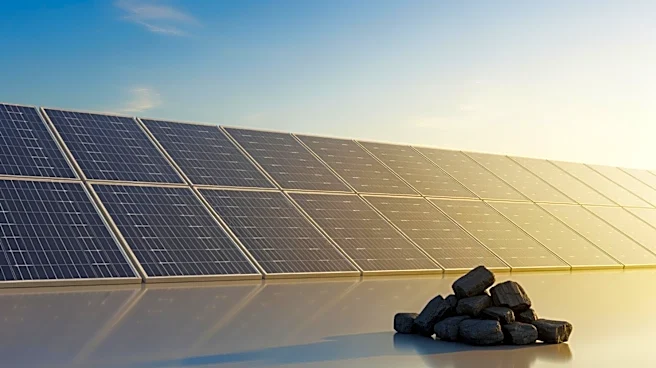
The expansion of Qcells' manufacturing capabilities in the U.S. is significant for several reasons. It represents a shift towards more domestic production of solar components, reducing reliance on foreign supply chains and exposure to tariff volatility. This move aligns with U.S. policies that incentivize domestic manufacturing through tax credits, such as the Section 45X manufacturing tax credits. The increased production capacity supports the growing demand for renewable energy, as solar power continues to outpace coal in electricity generation. This development also highlights the ongoing transition in the U.S. energy sector from fossil fuels to renewable sources, driven by economic and environmental considerations.
What's Next?
As Qcells ramps up to full production capacity, it is expected to further solidify its position in the U.S. solar market. The company's ability to produce all components domestically provides a competitive advantage, particularly in securing tax credits and avoiding supply chain disruptions. This could lead to increased investment in solar infrastructure and further expansion of renewable energy projects across the U.S. Additionally, the success of Qcells' operations may encourage other companies to invest in domestic solar manufacturing, contributing to the growth of the U.S. renewable energy sector.
Beyond the Headlines
The expansion of solar manufacturing in the U.S. has broader implications for energy policy and economic strategy. It reflects a growing recognition of the need for energy independence and the benefits of reducing carbon emissions. The shift towards renewable energy also has cultural and ethical dimensions, as it aligns with global efforts to combat climate change. Furthermore, the focus on domestic production supports job creation and economic growth in regions like Georgia, which have historically relied on fossil fuels. This transition may also influence public perception and policy decisions related to energy and environmental sustainability.