



What's Happening?
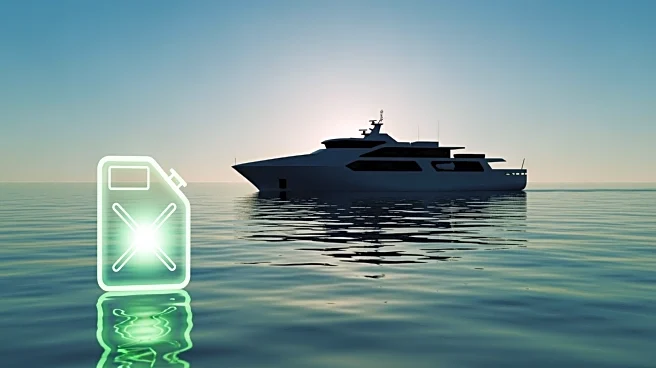
Cargill has announced the maiden voyage of the Brave Pioneer, the first of five green methanol dual-fuel dry bulk vessels chartered by the company. This initiative marks a significant step in Cargill's efforts to decarbonize its maritime operations. The Brave Pioneer, built by Tsuneishi Shipbuilding Co., Ltd. and owned by Mitsui & Co. Ltd., is designed to operate on both conventional marine fuels and green methanol, a lower-carbon alternative. The vessel's deployment is part of Cargill's broader strategy to test and implement innovative solutions for reducing carbon emissions in global shipping. The ship will conduct operational trials to evaluate green methanol bunkering readiness and assess market demand for low-carbon freight services.
Why It's Important?
The
launch of the Brave Pioneer is a critical development in the maritime industry's transition towards sustainable shipping. By adopting green methanol, Cargill aims to reduce CO2 emissions by up to 70% compared to conventional fuels. This move not only positions Cargill as a leader in maritime decarbonization but also sets a precedent for other companies in the sector to follow. The initiative supports global efforts to reduce supply chain emissions and aligns with increasing regulatory and consumer demands for sustainable practices. As one of the largest charterers of dry bulk freight, Cargill's actions could significantly influence the market and encourage wider adoption of low-carbon technologies.
What's Next?
Cargill plans to add four more vessels to its fleet over the coming years, each equipped with technologies like wind-assisted propulsion and energy-efficiency retrofits. These additions will further strengthen Cargill's multi-solution approach to decarbonization. The company will continue to explore alternative fuels such as biofuels and ethanol, aiming to future-proof its ocean transport operations. The success of the Brave Pioneer's trials will likely inform Cargill's future strategies and could lead to broader industry changes as other maritime companies look to adopt similar technologies.
Beyond the Headlines
The deployment of green methanol dual-fuel vessels represents a broader shift in the maritime industry towards sustainability. This transition involves not only technological advancements but also changes in regulatory frameworks and market dynamics. As companies like Cargill lead the way, there may be increased pressure on policymakers to support the development of renewable fuel infrastructure and incentivize sustainable practices. Additionally, the success of such initiatives could drive innovation in related sectors, such as renewable energy and carbon accounting systems, further contributing to global decarbonization efforts.