


What's Happening?
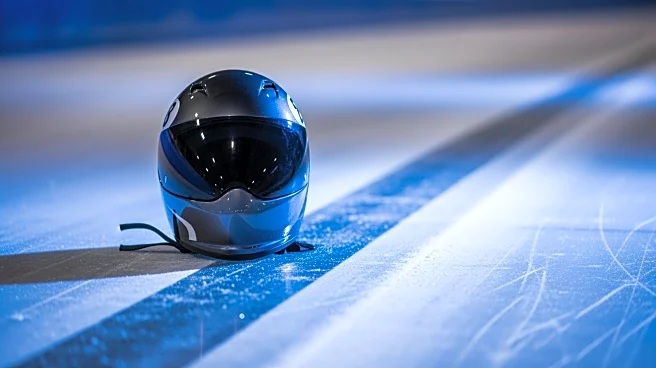
Ukrainian skeleton racer Vladyslav Heraskevych was disqualified from the Winter Olympics for wearing a commemorative helmet honoring Ukrainian athletes and coaches who died during Russia's invasion. Despite the International Olympic Committee's (IOC) decision, Heraskevych has been celebrated in Ukraine. He received a $200,000 gift from Ukrainian businessman Rinat Akhmetov to support his career and advocacy efforts. The funds will be directed to Heraskevych's charity foundation. Heraskevych's appeal against the disqualification was denied by the Court of Arbitration for Sport, which upheld the IOC's guidelines prohibiting political demonstrations at Olympic venues.
Why It's Important?
The disqualification of Heraskevych highlights the ongoing tension between sports
and political expression. The IOC's decision underscores the challenges athletes face when using their platform to make political statements. Heraskevych's case has drawn attention to the broader issue of freedom of expression in sports, particularly in the context of international conflicts. The financial support from Akhmetov not only aids Heraskevych's career but also emphasizes the role of private individuals in supporting athletes' rights to express their views. This incident may influence future discussions on the balance between sportsmanship and political advocacy.
What's Next?
Heraskevych's disqualification and subsequent support could prompt further debate within the IOC regarding its guidelines on political expression. The incident may lead to increased advocacy for athletes' rights to express political views, potentially influencing future policy changes. Additionally, Heraskevych's continued advocacy efforts, supported by the financial gift, may inspire other athletes to speak out on political issues, potentially leading to a broader movement within the sports community.