


What's Happening?
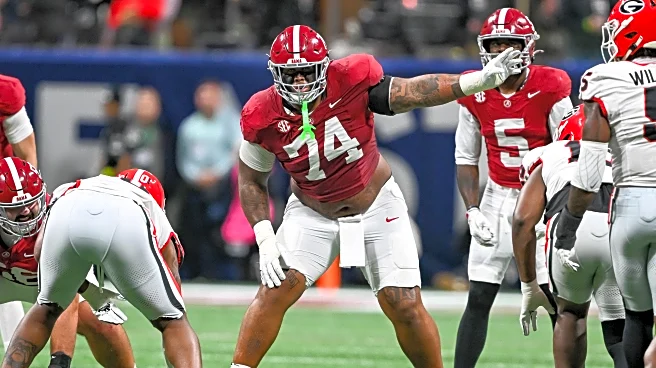
The Kansas City Chiefs are facing a significant financial challenge due to the $44.9 million cap hit associated with defensive tackle Chris Jones for the 2026 NFL season. Once considered one of the top players in the league, Jones' performance has been
on a decline, raising concerns about his value relative to his cost. According to Bleacher Report's Brad Gagnon, Jones is now viewed as the most overpaid player on the Chiefs' roster. Despite his declining performance, Jones remains a key figure for the team, having been with the Chiefs since being drafted in the second round of the 2016 NFL Draft. His leadership and experience are valued, but the financial implications of his contract could hinder the team's ability to build a competitive roster.
Why It's Important?
The financial implications of Chris Jones' contract are significant for the Kansas City Chiefs, as it could impact their ability to manage the salary cap effectively. With only five players in the league having a higher cap number than Jones, the Chiefs may face difficulties in retaining or acquiring other key players. This situation highlights the broader challenges NFL teams face in balancing player performance with financial commitments. The Chiefs' decision to maintain Jones on the roster despite his high cap hit underscores the importance of leadership and experience, but it also raises questions about long-term strategic planning and financial management within the organization.
What's Next?
As the 2026 season approaches, the Kansas City Chiefs will need to navigate the financial constraints imposed by Chris Jones' contract. The team may explore restructuring options or other financial maneuvers to alleviate the cap pressure. Additionally, the Chiefs will need to assess their roster-building strategies to ensure competitiveness while managing financial obligations. The situation may prompt discussions within the organization about future contract negotiations and the importance of aligning player performance with financial commitments. Stakeholders, including team management and fans, will be closely watching how the Chiefs address these challenges in the coming seasons.