



What's Happening?
Seabridge Gold has successfully navigated a significant legal challenge concerning its KSM project in British Columbia. Tudor Gold has decided to abandon its appeal against a 2025 decision by the Chief Gold Commissioner (CGC) regarding the Mitchell Treaty
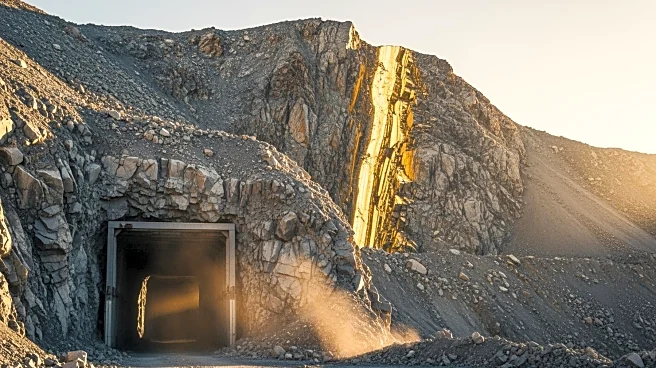
Tunnels (MTT). The CGC had previously declined jurisdiction over an application challenging the applicability of a conditional mineral reserve (CMR) linked to the tunnels. This decision effectively removes a layer of legal uncertainty for Seabridge, as the CMR requires claimholders not to obstruct the construction and operation of the tunnels. The tunnels are a critical component of the KSM project, linking its east and west sides, and about 12.5 km of these tunnels are expected to pass through claims owned by Tudor. Seabridge's CEO, Rudi Fronk, expressed satisfaction with the outcome, stating that the appeal lacked merit and that the authorizations for the MTT do not infringe on Tudor's mineral rights.
Why It's Important?
The resolution of this legal dispute is crucial for Seabridge Gold as it clears a major hurdle in the development of the KSM project, one of the largest undeveloped gold projects in the world. The decision reinforces the legal standing of the CMR, which has been supported by the British Columbia Ministry of Mines for over a decade. This development is significant for the mining industry as it underscores the importance of legal clarity in large-scale mining projects, which often involve complex land and resource rights. The outcome is likely to boost investor confidence in Seabridge's ability to proceed with the project, potentially leading to economic benefits such as job creation and increased local investment.
What's Next?
With the legal challenge now resolved, Seabridge Gold can focus on advancing the KSM project without the looming threat of further legal disputes over the MTT. The company will likely proceed with the construction and development phases, which could involve further negotiations with local stakeholders and regulatory bodies to ensure compliance with environmental and safety standards. The project's progress will be closely watched by industry analysts and investors, as it could set precedents for future mining projects in terms of legal and operational frameworks.