



What's Happening?
Gold prices have remained relatively stable as traders focus on upcoming central bank meetings, including the Federal Reserve's, amid persistent inflation concerns. The ongoing U.S.-Israel conflict with Iran has led to a surge in oil prices, with Brent
oil exceeding $105 per barrel due to restricted shipments through the Strait of Hormuz. This has fueled inflation fears and raised the possibility of prolonged high interest rates. While gold is traditionally viewed as an inflation hedge, its appeal is diminished when interest rates are high, as yield-bearing assets become more attractive. Investors are closely monitoring the Fed's meeting, which could be Jerome Powell's last as chair, for updates on the economic impact of the conflict and future interest rate paths.
Why It's Important?
The stability of gold prices amidst geopolitical tensions highlights the market's cautious approach as central banks prepare to address inflationary pressures. The Federal Reserve's decisions are crucial for setting the tone of global monetary policy, influencing economic conditions and investor confidence. High oil prices and inflation can lead to increased costs for consumers and businesses, potentially slowing economic growth. The Fed's stance on interest rates will be pivotal in determining the economic trajectory, affecting everything from consumer spending to corporate investment. The outcome of these meetings will be closely watched by global markets, as they seek to understand the broader economic implications of the ongoing conflict.
What's Next?
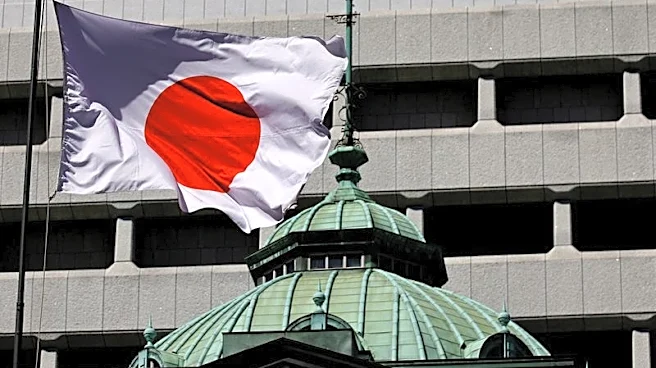
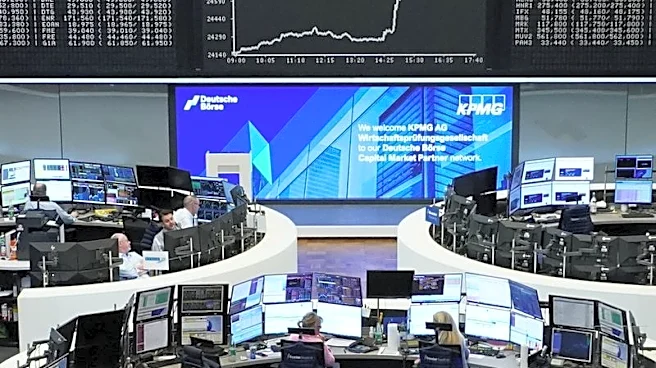
As the Federal Reserve and other central banks release their policy statements, investors will be looking for signals on how policymakers plan to address the economic fallout from the U.S.-Israel conflict with Iran. The Fed's policy statement and Jerome Powell's subsequent news conference will provide insights into the central bank's assessment of inflation and the labor market. Additionally, the meetings of the Bank of Japan, the European Central Bank, and the Bank of England will be critical in shaping global economic expectations. These developments will influence market dynamics and investment strategies in the near term.