
What's Happening?
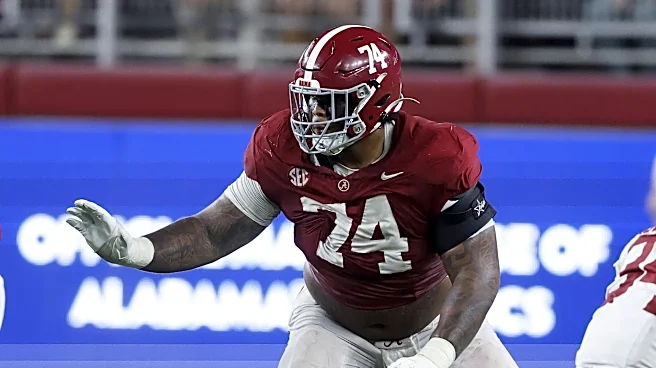
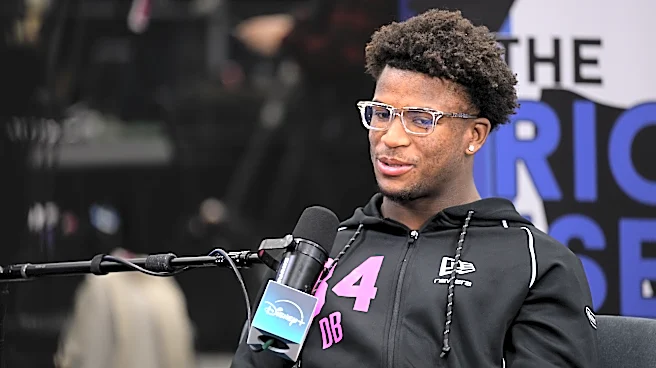
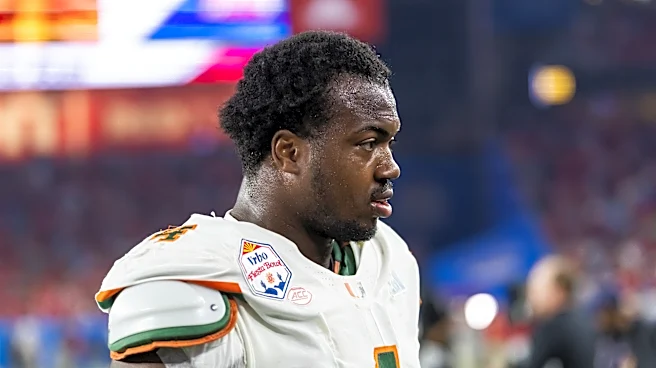
The 2026 NFL Draft is highlighting several pairs of players from the same team and position expected to be selected early. Among these, Ohio State's Arvell Reese and Sonny Styles are notable, with both
projected as top 5 picks. Reese is frequently mocked to the New York Jets at No. 2 overall, while Styles is anticipated to be picked by Tennessee at No. 4 or Cincinnati at No. 10. This scenario could see Ohio State having two linebackers selected within the top 10, a significant achievement for the program. Other pairs include running backs Jeremiyah Love and Jadarian Price, with Love expected to go top 5, and defensive ends Rueben Bain Jr and Ahkeem Mesidor, both considered first-round prospects despite minor concerns.
Why It's Important?
The prominence of Ohio State players in the draft underscores the university's strong football program and its ability to develop top-tier talent. The potential top 10 selections of Reese and Styles could enhance Ohio State's reputation and influence future recruitment. For NFL teams, acquiring such high-caliber players can significantly impact their defensive capabilities, potentially transforming team dynamics and performance. The draft also highlights the strategic considerations teams must make, balancing immediate needs with long-term potential, as seen in the evaluations of players like Bain and Mesidor.
What's Next?
As the draft approaches, teams will finalize their strategies, considering both immediate needs and future development. Ohio State's prospects will continue to be scrutinized, with potential shifts in mock drafts as teams weigh their options. The draft outcomes will influence team rosters and strategies for the upcoming season, with potential trades and negotiations occurring post-draft. For the players, their draft positions will determine their initial career trajectories and opportunities within the NFL.
Beyond the Headlines
The draft process highlights the intricate balance between player potential and team needs, with factors such as age and physical attributes playing significant roles in evaluations. The focus on pairs from the same team also emphasizes the importance of collegiate programs in shaping NFL prospects. This dynamic can lead to increased investment in college football programs and influence recruitment strategies, as universities aim to produce NFL-ready talent.