



What's Happening?
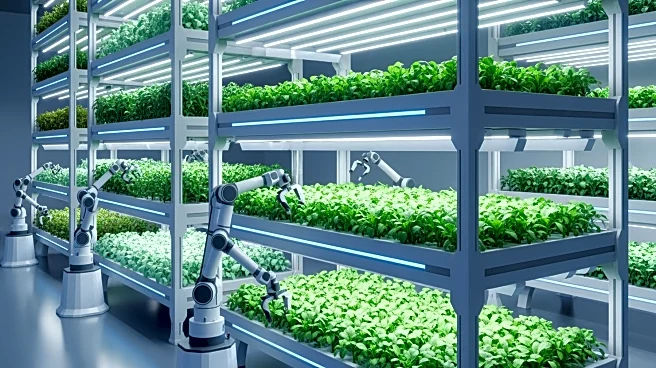
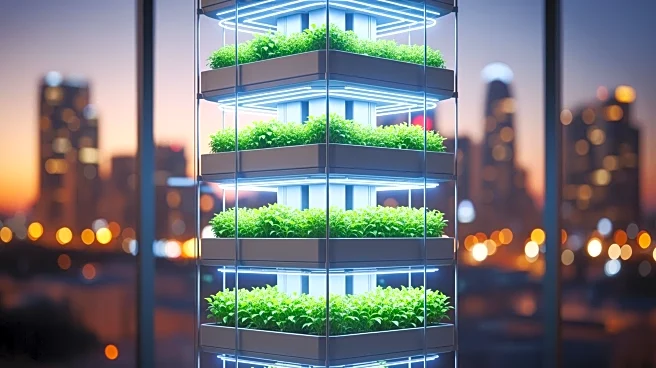
The global vertical farming market is projected to grow from $8 billion in 2025 to $39.7 billion by 2032, according to a report by Maximize Market Research. Vertical farming involves growing crops in layers using water-based systems rather than soil, often in urban environments where real estate is costly. North America, particularly the U.S. and Canada, is leading this trend due to urbanization and demand for sustainable produce. The Asia-Pacific region is also experiencing rapid growth, driven by government initiatives in countries like Singapore and Japan.
Why It's Important?
The expansion of vertical farming is crucial for addressing food security and sustainability challenges in urban areas. This method allows for efficient use of space and resources, reducing
the need for pesticides and minimizing environmental impact. As urban populations grow, vertical farming offers a viable solution for producing fresh, local produce. The industry's growth also presents opportunities for technological innovation and investment, particularly in hydroponics and aeroponics, which promise faster growth rates and richer flavors.
What's Next?
Despite its potential, vertical farming faces challenges such as a limited crop portfolio and high operational costs for certain produce. To overcome these barriers, the industry will need to invest in technological advancements and expand its crop offerings. Continued growth will depend on the ability to make vertical farming economically viable for a wider range of crops, potentially transforming urban agriculture and food supply chains.