


What's Happening?
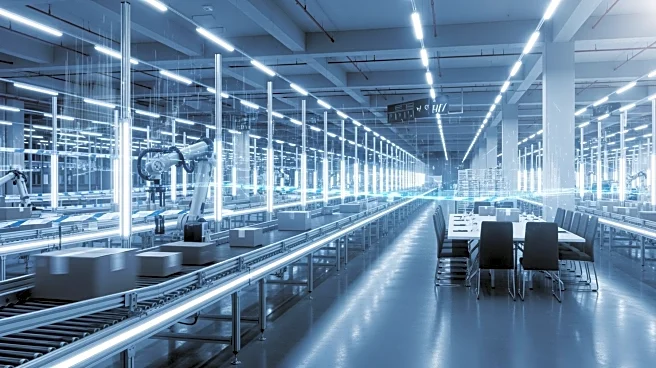
Zalando is enhancing its logistics operations by deploying up to 50 AI-driven robots across its European fulfillment network. This move underscores the importance of logistics in Zalando's growth strategy, following a strong financial performance in 2025.
The Berlin-based company reported a revenue increase to €12.3 billion, with a significant role played by AI technology in modern retail supply chains. The company is scaling AI across logistics, forecasting, and engineering, aiming to improve delivery accuracy and operational speed. A partnership with robotics firm Nomagic is central to this initiative, focusing on automating the handling of shoeboxes at scale. Despite geopolitical tensions affecting global supply chains, Zalando remains confident in its growth prospects for 2026.
Why It's Important?
Zalando's investment in AI and automation reflects a broader trend in retail supply chains, where technology is increasingly used to manage complexity and improve efficiency. The deployment of AI-driven robots is expected to enhance delivery accuracy and operational speed, potentially setting a new standard in logistics. However, geopolitical tensions, particularly in the Middle East, pose risks to global supply chains, affecting fuel costs and shipping routes. Retailers like Zalando must navigate these challenges while maintaining consumer trust and operational excellence. The company's focus on AI could provide a competitive edge, although the benefits may be incremental rather than transformative.
What's Next?
Zalando plans to continue expanding its AI-driven logistics operations across Europe, with further rollouts in countries like the Netherlands, Sweden, and France. The company aims to integrate AI more deeply into its supply chain processes, potentially improving inventory management and delivery promises. As geopolitical tensions persist, Zalando and other retailers may need to adapt their strategies to mitigate risks and ensure supply chain resilience. The ongoing investment in AI and automation could lead to gradual improvements in logistics efficiency, although the competitive advantage may be limited if other retailers adopt similar technologies.