
What's Happening?
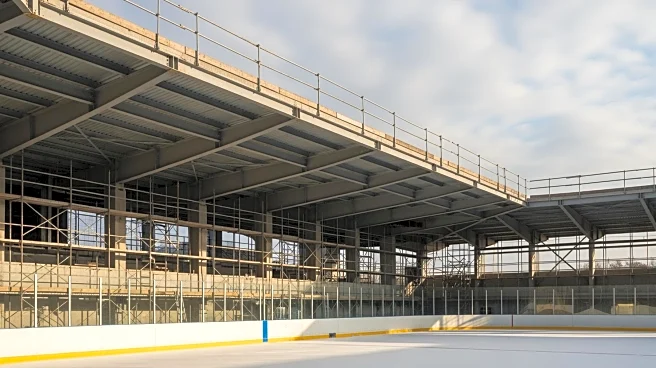
The Milano Santagiulia Ice Hockey Arena, a key venue for the 2026 Winter Olympics, is still under construction just five days before it is scheduled to host its first match. The arena, with a capacity
of 11,800, is one of two new ice hockey venues being built in Milan for the Games. BBC Sport reports that the site remains a bustling construction zone, with building materials and debris scattered both inside and outside the stadium. The venue is set to host significant events, including the men's and women's gold medal matches. However, the National Hockey League (NHL) has expressed concerns over the rink's dimensions, which are shorter than the NHL's minimum requirements, potentially increasing the risk of high-speed collisions. The quality of the ice has also been questioned, although a test event in January was deemed satisfactory by the NHL, despite a minor incident involving a hole in the ice.
Why It's Important?
The delay in completing the Milano Santagiulia Ice Hockey Arena could have significant implications for the 2026 Winter Olympics. The NHL has already issued a boycott warning, emphasizing the importance of player safety. If the venue is not ready or deemed unsafe, it could lead to disruptions in the ice hockey schedule, affecting athletes, teams, and fans. The situation highlights the challenges of meeting international standards for sports venues and the potential impact on the reputation of the Olympic Games. The readiness of the venue is crucial not only for the smooth execution of the events but also for maintaining the confidence of international sports organizations and participants.
What's Next?
With the first match scheduled for February 5, organizers are under pressure to complete the construction and ensure the venue meets safety standards. The International Olympic Committee (IOC) has been contacted for comment, and their response could influence the next steps. If the NHL's concerns are not addressed, there could be further discussions about the participation of NHL players in the Games. The situation may also prompt a review of construction timelines and safety protocols for future Olympic venues to prevent similar issues.