

What's Happening?
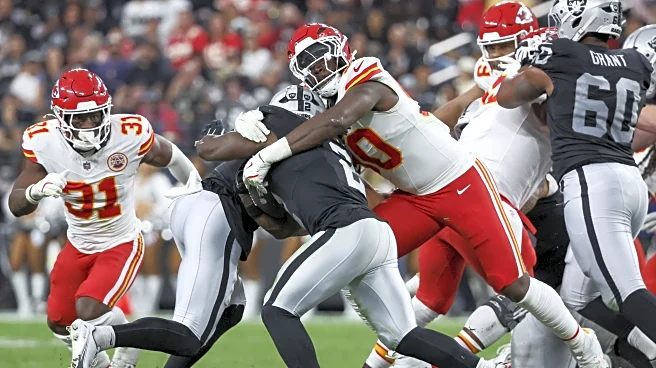
Tom Brady, the legendary quarterback, has explored the possibility of returning to the NFL while maintaining his minority ownership in the Las Vegas Raiders. Brady confirmed to CNBC that the NFL was not supportive of this idea, citing league policies
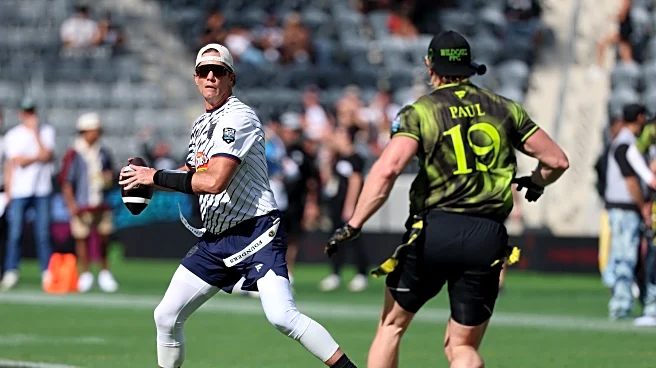
that prevent players from holding equity in a team. Despite his inquiry, Brady remains retired and content with his current roles, including his involvement in a recent flag football game. The NFL's policy requires him to divest his ownership stake to play again, highlighting the league's strict regulations on player-ownership roles.
Why It's Important?
This development underscores the NFL's commitment to maintaining clear boundaries between player roles and ownership interests. The league's decision reflects broader implications for how sports organizations manage conflicts of interest and maintain competitive integrity. Brady's situation could influence future discussions on policy adjustments, especially as more athletes transition into business roles post-retirement. The case also highlights the potential for retired players to impact team operations without being on the field, offering a new perspective on athlete career trajectories.
What's Next?
Brady's contentment with retirement suggests he may not pursue further attempts to return as a player. However, his involvement with the Raiders could lead to strategic changes within the team. The NFL may face pressure to revisit its policies as more players express interest in dual roles. This situation could spark broader discussions on the evolving nature of athlete involvement in team management and ownership.