




What's Happening?
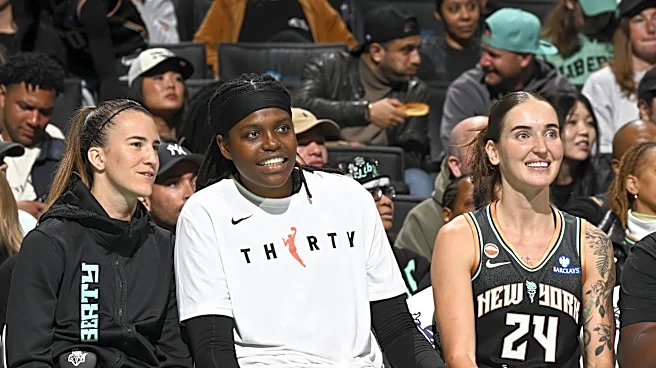
Cameron Brink, a forward for the Los Angeles Sparks, has raised concerns about marketing disparities in the WNBA, citing her own experience as a white, blonde athlete. In an interview, Brink discussed the privilege she perceives in marketing opportunities
compared to other players who may not receive the same level of endorsement deals despite strong performances. She emphasized the financial challenges faced by WNBA players, particularly in high-cost cities like Los Angeles and New York, and the ongoing struggle for fair compensation under the league's collective bargaining agreement. Brink's comments come as the WNBA continues to grow in popularity and seeks to address issues of equity and recognition for its athletes.
Why It's Important?
Brink's remarks highlight ongoing discussions about equity and representation in professional sports, particularly in women's leagues. The disparities in marketing and endorsement opportunities can affect players' financial stability and career longevity. Addressing these issues is crucial for the WNBA's growth and the broader movement towards gender equality in sports. Brink's advocacy for more equitable marketing practices could influence how brands and the league approach athlete endorsements, potentially leading to more inclusive and diverse representation.
Beyond the Headlines
The conversation around marketing disparities in the WNBA also touches on broader societal issues of race and privilege. Brink's acknowledgment of her own privilege opens a dialogue about how these factors influence opportunities in sports and beyond. The league's efforts to address these disparities could serve as a model for other sports organizations seeking to promote diversity and inclusion. Additionally, the financial challenges faced by WNBA players underscore the need for continued advocacy for fair compensation and support for female athletes.