



What's Happening?
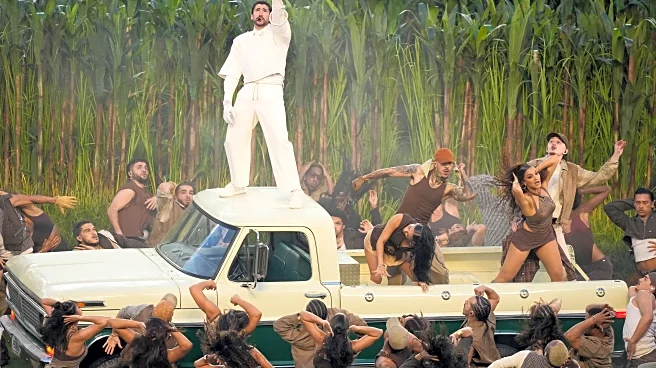
Bad Bunny delivered a vibrant performance at the Super Bowl halftime show, marking a historic moment as the first performer to sing primarily in Spanish at the event. The show, held at Levi's Stadium in Santa Clara, California, featured a tribute to Puerto Rico with palm trees and traditional elements like sugar cane farmers and coconut vendors. The performance included guest appearances by Lady Gaga and Ricky Martin, and showcased songs from Bad Bunny's latest album. The show concluded with a message promoting love over hate, displayed on a giant screen. However, President Trump criticized the performance on social media, calling it 'terrible' and inappropriate for young viewers.
Why It's Important?
The performance by Bad Bunny at the Super Bowl halftime show is
significant as it represents a cultural milestone, bringing Latin music and themes to one of the most-watched events in the United States. This inclusion highlights the growing influence and acceptance of Latin culture in mainstream American entertainment. However, the criticism from President Trump underscores ongoing cultural and political tensions, particularly regarding representation and the perceived appropriateness of diverse cultural expressions in national events. The event also reflects broader discussions about diversity and inclusion in the entertainment industry.
What's Next?
Following the performance, there may be increased discussions about the role of cultural representation in major U.S. events. The NFL and other organizations might face pressure to continue diversifying their entertainment choices. Additionally, President Trump's comments could spark further debate about cultural sensitivity and the impact of political figures on public perception of entertainment. Artists like Bad Bunny may continue to use their platforms to address social and political issues, potentially influencing future performances and public discourse.
Beyond the Headlines
The Super Bowl halftime show featuring Bad Bunny also touches on deeper issues of identity and belonging for the Latinx community in the U.S. The performance can be seen as a celebration of cultural heritage and a statement against the marginalization of minority groups. It raises questions about how mainstream platforms can be used to challenge stereotypes and promote cultural understanding. The event may inspire other artists to incorporate cultural narratives into their work, contributing to a broader movement towards inclusivity in the arts.