
What's Happening?
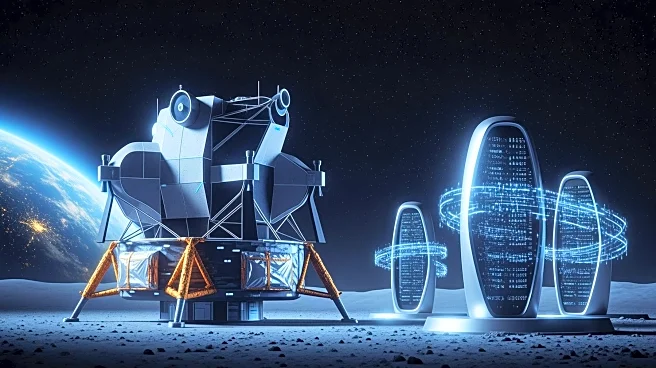
Elon Musk has proposed the development of a lunar mass driver to launch AI satellites into deep space. This concept involves using an electromagnetic railgun-like system to reduce launch costs significantly.
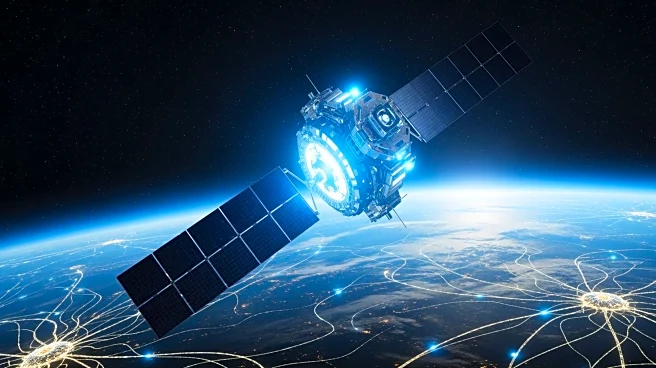
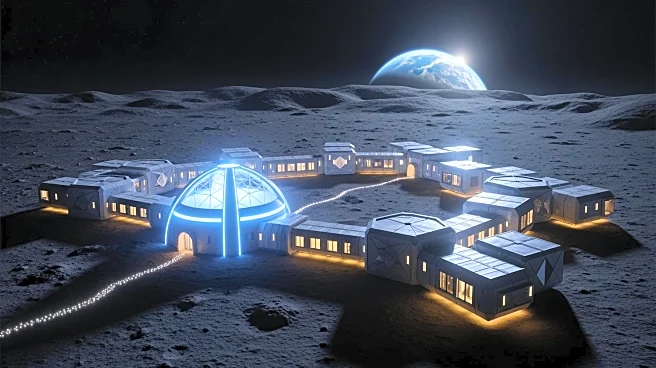
Musk envisions this as a step towards creating a self-sustaining lunar city, which could serve as a stepping stone for Mars colonization. The proposal highlights Musk's ongoing efforts to integrate artificial intelligence with space technology, building on SpaceX's achievements such as the Starship program. The mass driver could enable ultra-low latency networks for interplanetary internet, creating significant market opportunities.
Why It's Important?
Musk's proposal could revolutionize industries reliant on space data, particularly telecommunications. AI satellites launched from the Moon could enable new market opportunities projected to reach $10 billion by 2030. The development of radiation-hardened AI chips and neuromorphic computing are critical challenges that need to be addressed. The proposal also raises regulatory and ethical considerations, as the Outer Space Treaty requires peaceful use of space. The integration of AI in space technology could lead to significant advancements in satellite autonomy and resource extraction.
What's Next?
The implementation of Musk's vision will require overcoming technical challenges such as dust mitigation and power supply on the Moon. The competitive landscape includes key players like Blue Origin and China's CNSA, which are also advancing lunar ambitions. Future implications include enhanced global connectivity and potential partnerships for AI satellite manufacturing. The space AI market is forecasted to grow significantly, driven by applications in autonomous rovers and habitats. Addressing international collaboration and regulatory hurdles will be crucial for the success of this initiative.