



What's Happening?
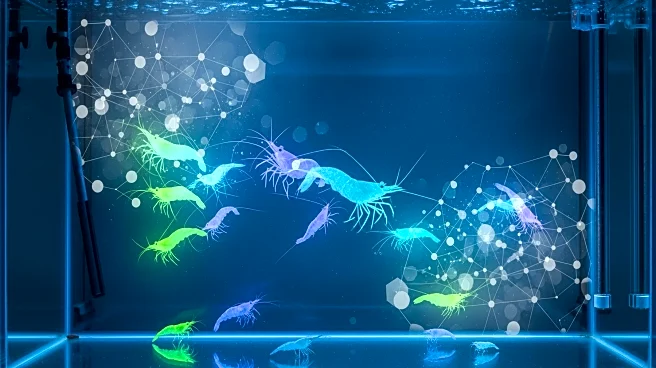
Atarraya, a high-tech shrimp farming company, is collaborating with a partner in the United Arab Emirates (UAE) to pilot its innovative production system. This initiative is part of a broader strategy to address food security in the Middle East and North
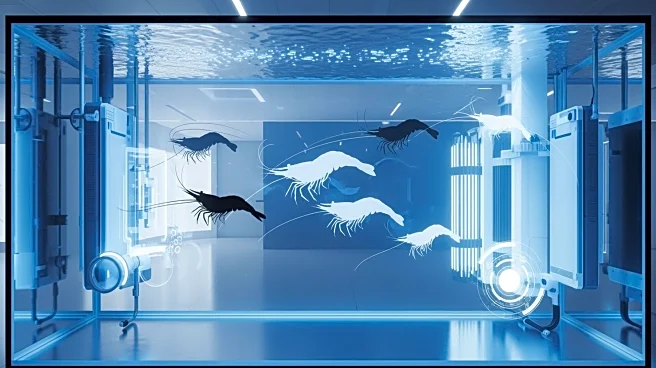
Africa (MENA) region. The company, which has been producing shrimp in Mexico, is shifting towards an asset-light business model, focusing on partnerships with 'master franchisors' in key regions. Atarraya's new approach includes the introduction of a cost-effective, IKEA-style flat-packed 'air shrimp' container, which reduces capital expenditure by 70% per ton. The UAE pilot project, in collaboration with Silal, a company established by Abu Dhabi Developmental Holding Company, aims to test the adaptability of Atarraya's technology to desert conditions. The goal is to scale production to meet at least 5% of the UAE's shrimp demand, as the country currently imports most of its shrimp.
Why It's Important?
This development is significant as it addresses the growing need for sustainable food production in regions with limited natural resources. By leveraging high-tech solutions, Atarraya aims to enhance local shrimp production, reducing reliance on imports and improving food security. The initiative also highlights the potential for innovative aquaculture practices to transform traditional farming methods, offering a more sustainable and efficient approach. The success of this pilot could lead to broader adoption of similar technologies in other regions facing food security challenges. Additionally, the project underscores the importance of international partnerships in addressing global food supply issues.
What's Next?
If the pilot proves successful, Atarraya plans to expand its operations in the UAE, potentially scaling up to meet a significant portion of the country's shrimp demand. The company is also exploring co-location opportunities with tomato growers, which could further enhance the efficiency and sustainability of its operations. This strategy involves using microbial biomass from shrimp farming as organic fertilizer for tomatoes, creating a symbiotic relationship between the two agricultural practices. As Atarraya continues to refine its business model, it may seek additional partnerships and funding to support its expansion efforts.