
What's Happening?
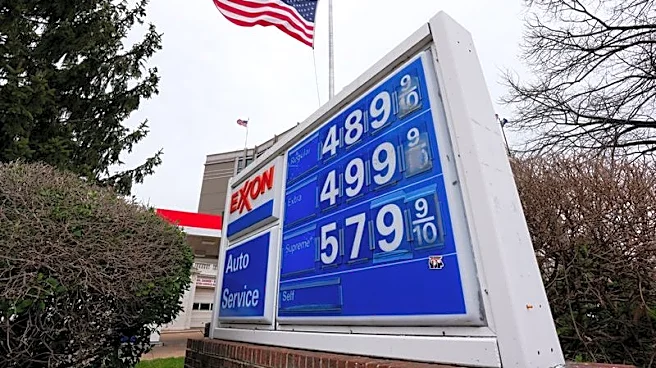
Gas prices in the United States have surged significantly, with a 21.2% increase from February to March, reaching a national average of $4.13 per gallon. This spike in fuel costs has led to a sharp decline
in consumer sentiment, as reported by the University of Michigan's Consumer Sentiment Index, which has hit a record low. The last comparable dip in consumer confidence occurred in June 2022, during the early stages of the Ukraine conflict, which also saw gas prices nearing $5 per gallon. The current situation is exacerbated by seasonal refinery maintenance and ongoing geopolitical tensions, particularly in the Strait of Hormuz, which threaten to push prices even higher. Analysts, including former commodities trader Stephen Schork and JPMorgan, have warned that gas prices could again reach $5 per gallon.
Why It's Important?
The increase in gas prices is a significant concern for both consumers and businesses. For consumers, higher fuel costs reduce disposable income, leading to decreased spending in other areas and negatively impacting overall economic sentiment. For businesses, especially small enterprises, rising fuel costs increase operational expenses, affecting supply chains and potentially leading to higher prices for goods and services. This situation poses a challenge to economic recovery efforts, as high fuel prices can stifle consumer spending and business growth. The broader economic implications include potential inflationary pressures and a slowdown in economic activity, which could affect employment and investment decisions.
What's Next?
As the summer approaches, gas prices are expected to remain high due to seasonal demand and ongoing geopolitical issues. Consumers and businesses may need to adjust their budgets and strategies to cope with the increased costs. Policymakers might face pressure to address the situation through measures such as releasing strategic petroleum reserves or implementing policies to stabilize fuel prices. Additionally, there could be increased interest in alternative energy sources and public transportation as long-term solutions to mitigate the impact of volatile fuel prices.