
What's Happening?
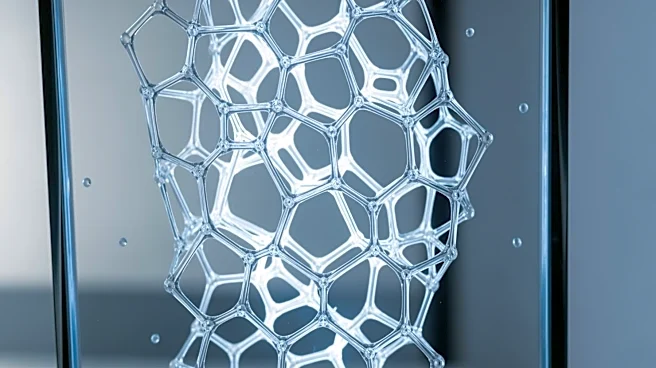
Researchers have discovered a new method to engineer metal-organic framework (MOF) glasses, which can efficiently trap gases like CO2 and hydrogen. By adding sodium or lithium compounds, scientists can alter
the glass's behavior, making it easier to manufacture. This advancement opens up possibilities for creating high-performance materials for gas separation, chemical storage, and advanced coatings. The study, published in Nature Chemistry, highlights the potential of MOF glasses to revolutionize material science and industrial applications.
Why It's Important?
The development of MOF glasses with enhanced properties has significant implications for various industries, including energy, environmental technology, and manufacturing. These materials could lead to more efficient gas separation processes, improved chemical storage solutions, and innovative coatings. The ability to fine-tune MOF glasses could drive advancements in sustainable technologies, offering new tools for addressing environmental challenges. This breakthrough represents a step forward in material science, with the potential to impact multiple sectors and contribute to technological progress.