





What's Happening?
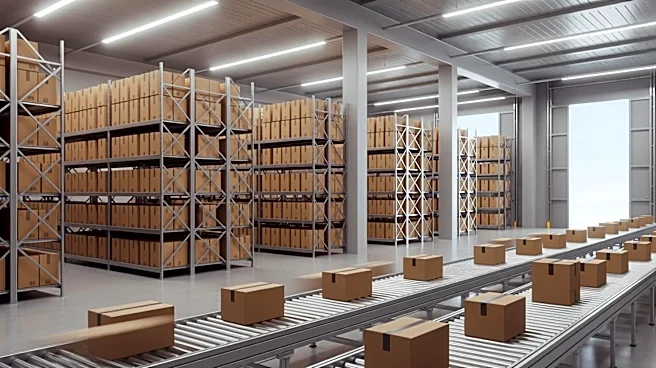
The supply chain industry is undergoing a transformation with the rise of intelligent orchestration, driven by advancements in AI and machine learning. Modern supply chain control towers are evolving from providing visibility to enabling predictive and prescriptive
analytics. These technologies allow for real-time decision-making, optimizing logistics operations, and enhancing efficiency. Companies are leveraging AI to automate routine tasks, improve inventory management, and enhance transportation planning. This shift is part of a broader move towards Industry 5.0, where AI and generative AI play a central role in supply chain management.
Why It's Important?
The integration of AI in supply chain management offers significant benefits, including cost reduction, improved efficiency, and enhanced decision-making capabilities. For U.S. businesses, adopting these technologies can provide a competitive edge in a rapidly changing global market. The ability to predict and respond to disruptions in real-time can help companies maintain supply chain resilience and meet consumer demands more effectively. However, the reliance on AI also raises concerns about data security, ethical considerations, and the need for skilled personnel to manage these advanced systems.
What's Next?
As more companies adopt AI-driven supply chain solutions, there will be a growing demand for skilled professionals who can manage and optimize these systems. The industry may also see increased collaboration between technology providers and supply chain operators to develop tailored solutions. Additionally, there could be a push for regulatory frameworks to address data privacy and ethical concerns associated with AI in supply chain management. Companies that successfully integrate AI into their operations will likely gain a strategic advantage in the marketplace.