


What's Happening?
The National Women's Soccer League (NWSL) has introduced a new rule known as the High Impact Player (HIP) rule, aimed at allowing teams to exceed the salary cap by up to $1 million for certain high-profile players. This initiative, which has been in development
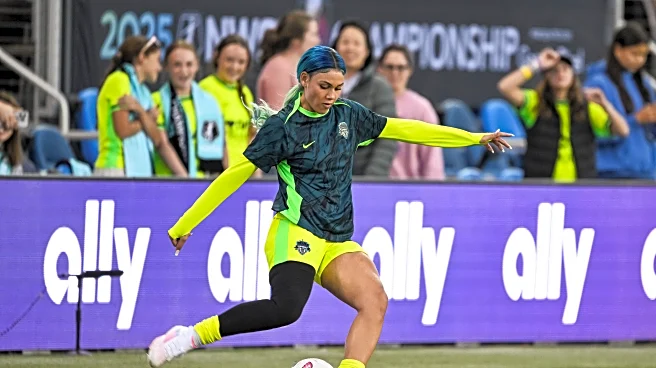
since 2023, is designed to help the league keep pace with the growing women's soccer market. The rule, sometimes referred to as the 'Rodman Rule' due to its association with player Trinity Rodman, allows clubs to attract and retain top talent by providing financial flexibility. Players eligible for this rule must meet specific criteria, such as being listed in the top 40 of the Guardian's '100 best' lists or being recent MVP finalists. The rule is set to take effect on July 1, 2026, and aims to balance the league's competitive landscape while maintaining financial sustainability.
Why It's Important?
The introduction of the HIP rule is significant as it addresses the NWSL's need to remain competitive in the global sports market by attracting and retaining top-tier talent. By allowing teams to exceed the salary cap for high-impact players, the league can better compete with international clubs that offer lucrative contracts. This move is expected to enhance the quality of play and increase the league's visibility and marketability. However, it also raises questions about the potential impact on veteran players who may not qualify for HIP status and the overall salary cap structure. The rule reflects the league's strategic approach to growth and its commitment to maintaining parity among teams.
What's Next?
As the HIP rule comes into effect, teams will need to strategize on how to best utilize the additional financial flexibility. This may involve re-evaluating current rosters and making strategic acquisitions to maximize the benefits of the rule. The NWSL Players Association may also engage in discussions regarding the implications of the rule on player compensation and collective bargaining agreements. The league will likely monitor the rule's impact on team dynamics and competitive balance, potentially leading to further adjustments in the future.