



What's Happening?
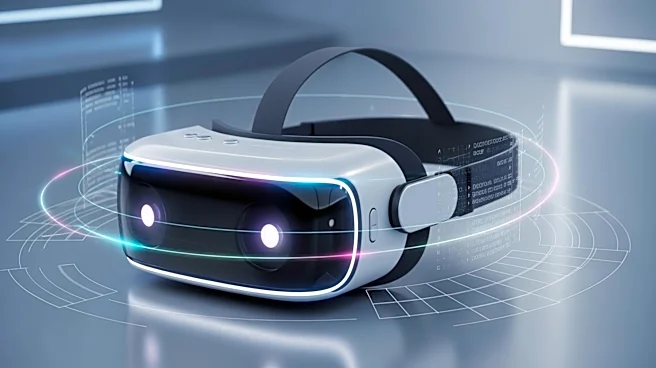
The augmented reality (AR) wearables market is poised for significant changes in 2026, driven by major hardware innovations from leading tech companies. Apple is testing four smart-glasses designs, potentially launching in 2027, which could redefine AR as a fashion-first
product. Snap has partnered with Qualcomm to enhance its Specs with on-device AI and better graphics, aiming for a 2026 consumer release. Additionally, Google is collaborating with Gucci to create luxury AI glasses, targeting a 2027 launch. These developments highlight a shift towards diverse strategies, including platform depth, silicon partnerships, and style-first branding, as companies vie for dominance in the AR space.
Why It's Important?
The advancements in AR hardware are significant as they represent a convergence of technology and fashion, potentially broadening the appeal of AR wearables. Apple's approach to treating smart glasses as eyewear rather than headsets could normalize their use in everyday life. Snap's collaboration with Qualcomm indicates a move towards mainstream consumer adoption, leveraging popular features from Snapchat. Meanwhile, Google's partnership with Gucci could reduce the stigma associated with AR wearables by integrating luxury branding. These innovations are likely to influence consumer preferences, drive market competition, and shape the future of wearable technology.
What's Next?
As these AR hardware innovations unfold, the market will likely see increased competition and consumer interest. Companies will need to balance technological advancements with consumer-friendly designs and pricing strategies. The success of these initiatives will depend on their ability to meet consumer expectations for functionality, style, and affordability. Industry stakeholders, including tech companies and fashion brands, will continue to explore partnerships and innovations to capture market share. The evolution of AR wearables could also lead to new applications and use cases, further integrating AR technology into daily life and potentially transforming various industries.