


What's Happening?
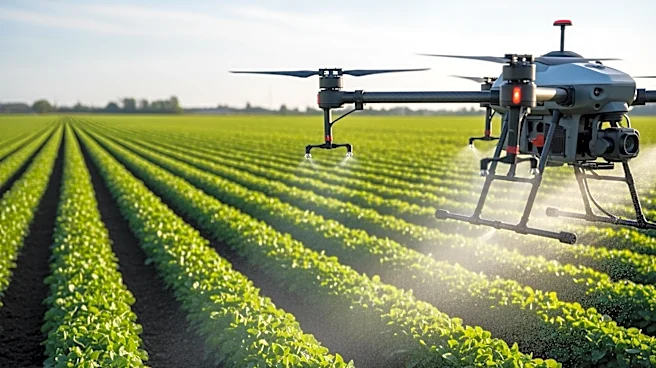
New precision agriculture technology is helping farmers manage irrigation more effectively amid increasing water challenges. Researchers have developed a robotic system that measures soil moisture for each tree in an orchard, providing detailed data that traditional
soil sensors cannot. This system, which travels through fields to collect soil data, allows farmers to understand water distribution across their orchards better. According to Elia Scudiero, associate professor of precision agriculture, the robotic system measures electrical conductivity, a property influenced by moisture, salt, and clay content. This data is combined with existing sensor readings to create accurate maps of water availability, enabling farmers to irrigate only where necessary.
Why It's Important?
As water scarcity becomes a more pressing issue, efficient water use is critical for maintaining agricultural productivity and profitability. This technology allows farmers to optimize water usage, reducing waste and ensuring that crops receive the necessary moisture levels. By improving irrigation practices, farmers can prevent plant stress and root damage, which can occur from both under- and over-watering. Additionally, better water management helps reduce nutrient loss and protect groundwater from pollution. As water costs rise and regulations tighten, such precision tools offer a sustainable solution for farmers, allowing them to continue operations without depleting resources.