










What's Happening?
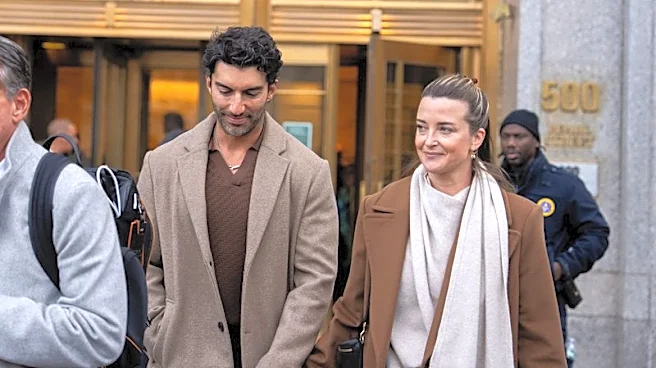
Katie Holmes and Joshua Jackson, former co-stars from the popular TV series 'Dawson's Creek', reunite in the film 'Happy Hours', which premiered at the Tribeca Festival. The film, written and directed by Holmes, explores the story of former high-school
sweethearts who reconnect years later. Despite the nostalgic appeal and the chemistry between the leads, the film has been criticized for its contrived plot and lack of authenticity. Set in Manhattan, the narrative follows Liz, a photojournalist played by Holmes, who encounters her former love, Andrew, portrayed by Jackson. The film attempts to blend romance with comedic elements, but critics have noted that the storyline is filled with clichés and predictable twists.
Why It's Important?
The reunion of Holmes and Jackson in 'Happy Hours' taps into the nostalgia of 'Dawson's Creek' fans, potentially drawing a dedicated audience. However, the film's reception highlights the challenges of reviving past on-screen chemistry in a new context. The critical response underscores the importance of authentic storytelling in romantic dramas, especially when dealing with themes of rekindled love. The film's performance could influence future projects involving similar reunions of beloved TV cast members, impacting decisions in the entertainment industry regarding the revival of past successes.
What's Next?
Following its premiere, 'Happy Hours' may face challenges in achieving box office success if the critical reception does not improve. The film's performance could affect Holmes' plans for a trilogy, as she has indicated intentions to continue the story in a manner similar to Richard Linklater's 'Before' series. The reception of 'Happy Hours' will likely influence the direction and development of any sequels, as well as Holmes' future projects as a director and writer.
Beyond the Headlines
The film's exploration of middle-aged romance and the complexities of past relationships offers a narrative that resonates with audiences experiencing similar life stages. However, the film's reliance on clichés and predictable plot devices may limit its impact. The portrayal of diverse characters, including a deaf character communicating in ASL, adds a layer of inclusivity, though some critics have found these elements forced. The film's reception may prompt discussions on the balance between nostalgia and innovation in storytelling.