






What's Happening?
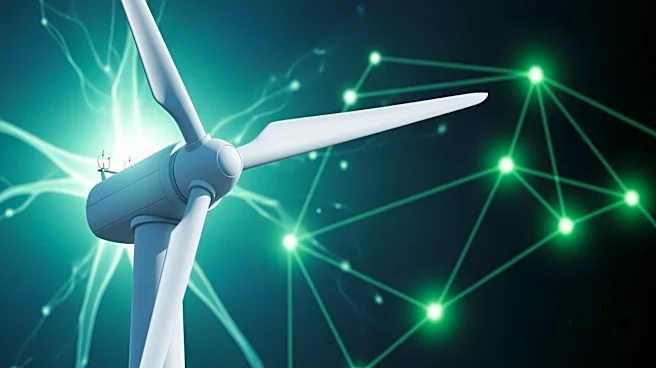
A recent study explores the use of artificial neural network (ANN) control techniques to improve the performance of wind generation systems. The research focuses on optimizing the adjustable blade pitch angle using various control methods, including Proportional
Integral Derivative (PID), Fractional PID (FPID), and neural networks. The study demonstrates that these techniques can significantly enhance the efficiency and stability of wind turbines by adjusting the pitch angle to maintain optimal rotor speed and power output. The research employs MATLAB SIMULINK to simulate the control systems, highlighting the potential of ANN to improve renewable energy technologies.
Why It's Important?
The application of ANN in wind energy systems represents a significant advancement in renewable energy technology. By improving the efficiency and reliability of wind turbines, these techniques can contribute to increased adoption of wind energy, supporting broader efforts to transition to sustainable energy sources. The ability to maintain optimal performance under varying wind conditions can lead to more consistent energy production, reducing reliance on traditional energy sources. This development is crucial for meeting energy demands while minimizing environmental impact, aligning with global efforts to combat climate change.
Beyond the Headlines
The integration of ANN in wind energy systems also raises considerations about the complexity and cost of implementing such technologies. While ANN offers enhanced performance, it requires significant computational resources and expertise to develop and maintain. Additionally, the reliance on advanced algorithms may introduce challenges in system transparency and decision-making processes. As the energy sector increasingly adopts AI-driven solutions, addressing these challenges will be essential to ensure the reliability and accessibility of renewable energy technologies.