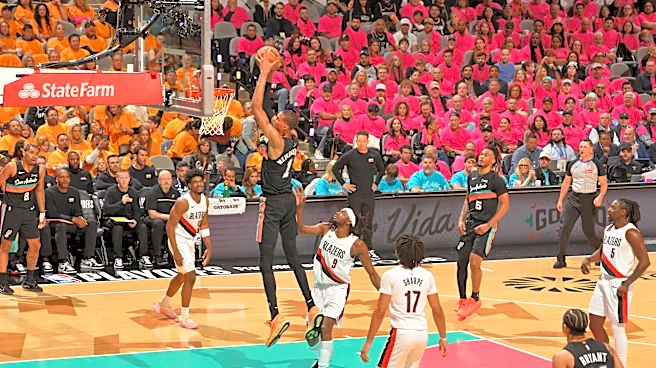








What's Happening?
The Portland Trail Blazers, under the new ownership of Tom Dundon, have implemented cost-cutting measures that have garnered national attention. Despite making the playoffs for the first time in five years, the focus has shifted to the team's financial
strategies rather than their on-court performance. Reports indicate that Dundon has been reducing expenses, including not sending two-way players to away games during the playoffs, a move that deviates from standard NBA practices. This approach has sparked discussions about the financial management and priorities of the team under Dundon's leadership.
Why It's Important?
The cost-cutting measures by the Portland Trail Blazers highlight a shift in the team's operational strategy under Tom Dundon's ownership. This approach could have implications for the team's performance and morale, as well as its reputation within the league. By prioritizing financial efficiency, the Blazers may be setting a precedent for other teams facing similar economic pressures. However, this strategy could also lead to challenges in attracting and retaining talent, as potential players and staff may view the team's financial conservatism as a limitation. The broader impact on the NBA could involve discussions on balancing financial management with competitive success.
What's Next?
As the Portland Trail Blazers continue their playoff run, the team's financial strategies will likely remain under scrutiny. Stakeholders, including fans, players, and league officials, may respond to these measures with varying degrees of support or criticism. The team's performance in the playoffs could influence public perception of Dundon's cost-cutting approach. Additionally, the Blazers' financial decisions may prompt other NBA teams to reevaluate their own strategies, potentially leading to broader discussions on fiscal responsibility and competitiveness in professional sports.