
What's Happening?
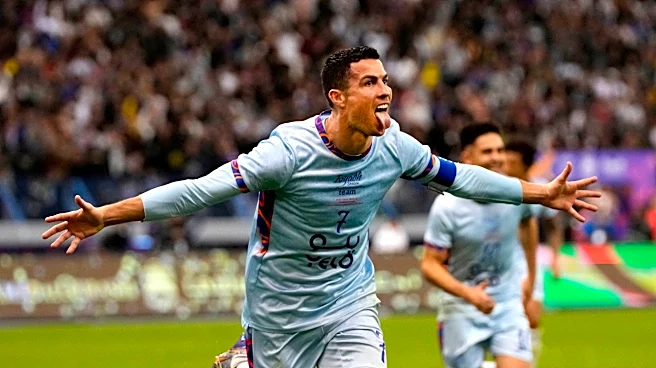
As the 2026 World Cup approaches, teams are preparing to showcase not only their athletic prowess but also their national pride through their kits. The majority of these kits, 77% to be precise, are designed by the leading sportswear companies Adidas,
Nike, and Puma. Adidas leads the pack, outfitting 14 nations, including prominent teams like Germany, Japan, and reigning champions Argentina. Nike follows closely, providing kits for 12 nations, including co-hosts the United States and Canada. Puma is responsible for the kits of 11 teams, such as Portugal and Morocco. Beyond these giants, smaller brands like Kelme, Capelli Sport, and Umbro are also represented, each designing kits for one or two teams. This diverse array of kit manufacturers highlights the global nature of the tournament and the varied approaches to national representation through sportswear.
Why It's Important?
The dominance of major sportswear brands in the World Cup underscores their significant influence in the global sports industry. For companies like Adidas, Nike, and Puma, the World Cup is a crucial platform for brand visibility and market expansion. The event provides an opportunity to showcase their latest innovations in sportswear technology and design, potentially influencing consumer preferences worldwide. Smaller brands participating in the tournament gain exposure on an international stage, which can lead to increased brand recognition and market opportunities. For the teams, the kits are more than just uniforms; they are symbols of national identity and pride, contributing to the cultural and emotional impact of the World Cup.
What's Next?
As the World Cup draws nearer, anticipation will build around the unveiling of each team's kits, with fans eager to see how their national colors are represented. The tournament will likely influence future trends in sportswear design, as brands seek to capitalize on the exposure. Post-tournament, sales of replica kits are expected to surge, providing a financial boost to the brands involved. Additionally, the performance of the teams and the popularity of their kits could impact future sponsorship deals and collaborations between national teams and sportswear companies.