



What's Happening?
Valeo, a prominent automotive supplier, is presenting its latest innovations in sustainable materials at the JEC World 2026 event in Paris. The company is highlighting components such as front cooling modules, HVAC housings, and battery packs made from
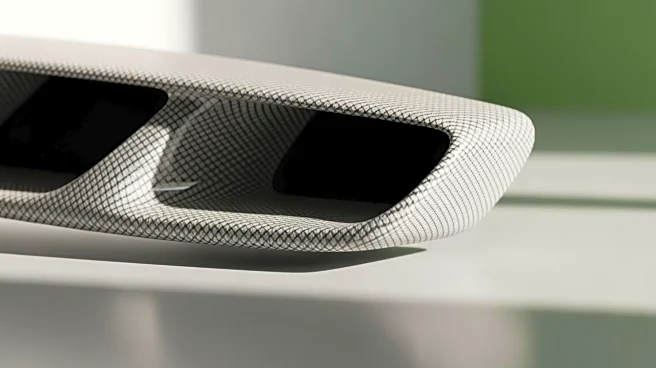
recycled plastics, bio-based materials, and organosheet composites. These materials are designed to deliver equivalent mechanical properties while significantly reducing weight and carbon footprint. For instance, the front cooling modules incorporate 25-30% post-consumer recycled materials, and the HVAC system housing is made from 60% recycled plastic. Additionally, a heat exchanger water tank uses 49% bio-based materials. Valeo's battery pack, made from organosheets, offers a 30% mass reduction and a 20% lower carbon footprint compared to traditional steel. The company has been producing organosheet bolsters and crash absorbers since 2018, achieving around 30% weight reduction compared to steel parts.
Why It's Important?
Valeo's innovations are significant as they address the automotive industry's growing demand for sustainable and lightweight materials. By reducing the weight of vehicle components, these materials can improve fuel efficiency and reduce emissions, aligning with global efforts to combat climate change. The use of recycled and bio-based materials also supports circular economy principles, reducing reliance on virgin resources and minimizing environmental impact. Valeo's commitment to achieving carbon neutrality by 2050 further underscores the importance of these developments. As the automotive industry faces increasing regulatory pressure to lower emissions, such advancements could provide a competitive edge and set new standards for sustainability in vehicle manufacturing.
What's Next?
Valeo's ongoing research and development efforts suggest that further innovations in sustainable materials are likely. The company's focus on circularity in operations and supply chains indicates a strategic direction towards more environmentally responsible manufacturing processes. As Valeo continues to develop and showcase these materials, other automotive manufacturers may follow suit, potentially leading to broader industry adoption. This could result in increased collaboration between automotive companies and material science researchers to explore new applications and improve existing technologies. Additionally, regulatory bodies may take note of these advancements, potentially influencing future environmental standards and policies in the automotive sector.