







What's Happening?
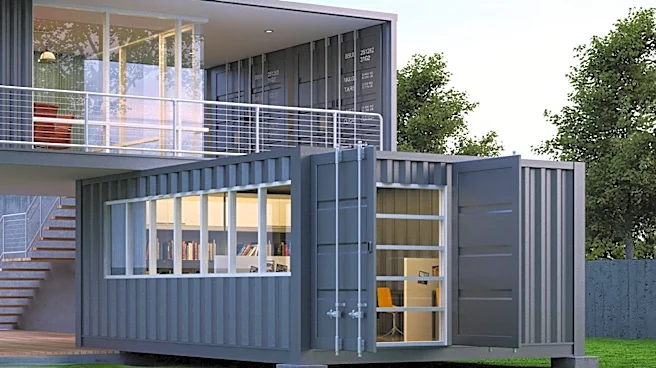
An Israeli family, the Gals, has embarked on an unconventional journey to build a home using shipping containers on a newly acquired farm in Kfar Yehezkel. Yaron and Ronit Gal, along with their children, are constructing the house themselves, emphasizing
economic efficiency and sustainability. This decision follows years of living in a self-built mud house, which was initially intended as a temporary solution. Yaron, who has been diagnosed with PTSD after rescuing survivors from the Nova music festival and serving in reserve duty, finds solace in this hands-on project. The family aims to create a simple, rural home that blends with the landscape, using secondhand materials to minimize costs.
Why It's Important?
This story highlights a growing trend towards sustainable and cost-effective housing solutions, particularly in the face of economic pressures and personal challenges. The Gal family's approach reflects a shift in priorities, focusing on mindful consumption and community involvement. Their project not only addresses their immediate housing needs but also serves as an inspiration for others seeking alternative living arrangements. Additionally, Yaron's experience with PTSD underscores the importance of mental health support for individuals affected by traumatic events, and how personal projects can aid in recovery.
What's Next?
As the Gal family continues to build their home, they face challenges such as establishing infrastructure for sewage and electricity. Their journey may inspire others to consider similar sustainable housing solutions, potentially influencing housing policies and community planning. The family's story could also raise awareness about the benefits of alternative construction methods and the importance of mental health support for those affected by trauma.
Beyond the Headlines
The Gal family's project raises questions about the sustainability of traditional housing models and the potential for alternative construction methods to address housing shortages. Their use of shipping containers and secondhand materials challenges conventional building practices and highlights the environmental benefits of reducing waste. This approach may encourage a cultural shift towards more sustainable living and community-focused development.