

What's Happening?
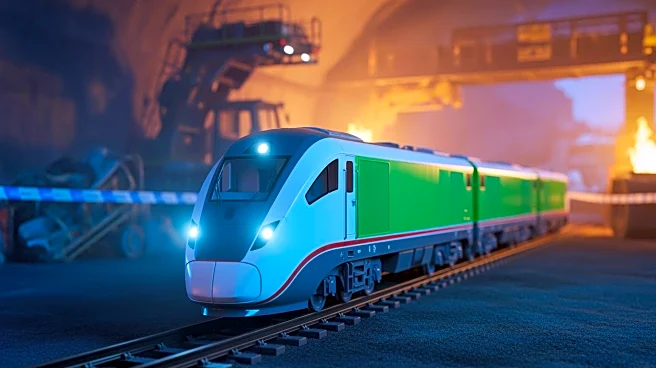
Andrew Forrest's mining company has introduced battery-powered trains in the Pilbara region, marking a significant shift from traditional diesel-powered locomotives. These battery-electric trains are equipped with 14.5 MWh systems, offering a sustainable alternative to diesel, which has been the standard in mining transport for over a century. The transition is driven by economic factors, such as the elimination of volatile fuel costs, and regulatory pressures to reduce carbon emissions. The new trains promise operational cost savings and reduced maintenance, with the potential for positive returns within 5-7 years. This initiative aligns with broader industry trends towards electrification and decarbonization.
Why It's Important?
The deployment of battery-powered
trains in mining operations represents a pivotal moment in the industry's efforts to reduce its carbon footprint. By transitioning to electric locomotives, mining companies can significantly cut down on diesel consumption, which is a major operational expense. This shift not only supports corporate sustainability goals but also aligns with global efforts to combat climate change. The economic benefits, including predictable energy costs and reduced maintenance, make a compelling case for widespread adoption. As mining companies face increasing pressure from investors and regulators to demonstrate environmental responsibility, electrification of transport systems could become a competitive advantage.
What's Next?
The success of this initiative could lead to broader adoption of battery-electric technology across the mining sector. Infrastructure adaptations, such as the installation of high-power charging stations and grid capacity upgrades, will be necessary to support this transition. The Pilbara region's experience may serve as a model for other mining operations globally. Additionally, partnerships with manufacturers and technology providers will be crucial in scaling production and overcoming supply chain challenges. As the industry moves towards electrification, ongoing innovation and investment in battery technology will be essential to meet future demands.