





What's Happening?
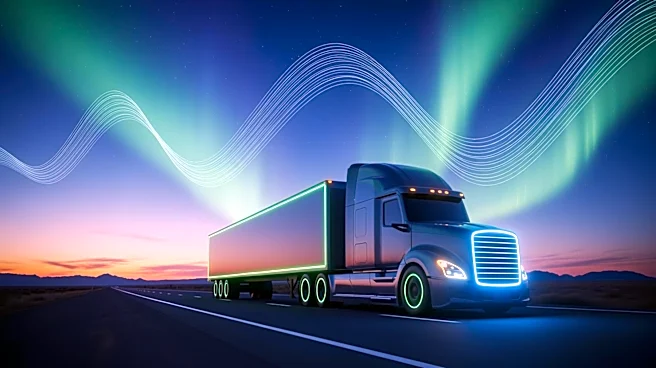
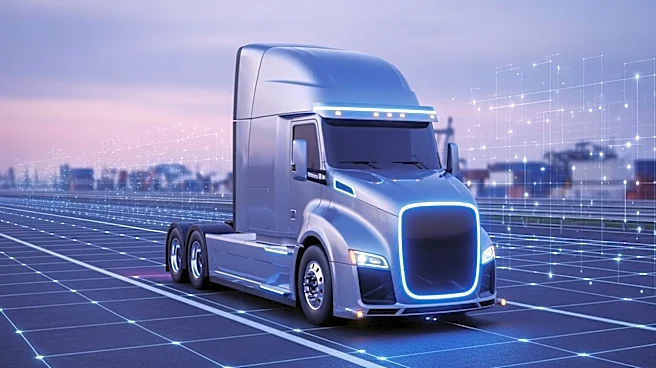
Aurora Innovation Inc. and McLane Company Inc. have launched driverless trucking operations between Dallas and Houston, Texas. This initiative utilizes the Aurora Driver, an SAE Level 4 self-driving system, to facilitate long-haul trucking. The collaboration
aims to improve the efficiency of moving perishable goods by leveraging autonomous technology. Aurora and McLane previously conducted a supervised autonomy pilot, during which the Aurora Driver completed over 280,000 autonomous miles and delivered 1,400 loads. The success of this pilot, marked by a 100% on-time performance, led to the decision to transition to fully driverless operations. The companies plan to expand these operations to new routes across the U.S. Sun Belt by the end of 2026, enhancing McLane's distribution capabilities.
Why It's Important?
The deployment of driverless trucks represents a significant advancement in supply chain logistics, offering potential benefits such as increased efficiency, reduced operational costs, and enhanced reliability. By automating the 'middle mile' of transportation, Aurora and McLane can optimize their supply chain operations, ensuring timely delivery of goods while allowing human drivers to focus on the critical last-mile delivery. This development could lead to broader adoption of autonomous trucking technology, influencing logistics strategies and potentially reshaping the transportation industry. The initiative also underscores the growing importance of technology in addressing logistical challenges, which could have far-reaching implications for supply chain management and economic competitiveness.
What's Next?
Aurora and McLane will continue to expand their driverless operations, with plans to introduce new routes and serve additional customers. The success of this initiative may encourage other logistics companies to explore autonomous solutions, potentially accelerating the adoption of self-driving technology in the industry. As the technology matures, regulatory frameworks and safety standards will likely evolve to accommodate the growing presence of autonomous vehicles on public roads.