


What's Happening?
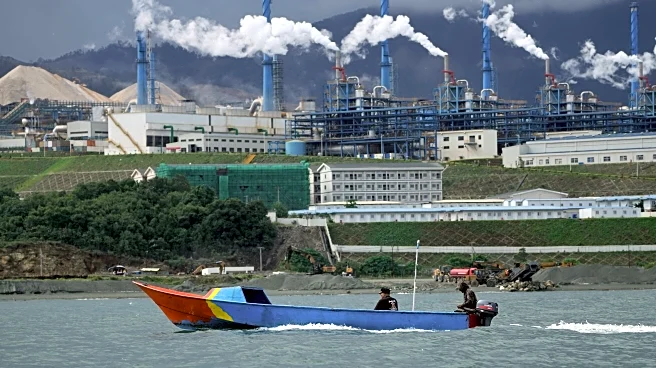
Aluminium Bahrain (Alba) has announced a significant increase in net profit for the year 2025, reaching BD218.7 million ($582 million), up from BD184.5 million in 2024. This surge is attributed to the impact of US tariffs, which have driven up domestic aluminium prices. The company's total income rose by 16% year-on-year, with aluminium prices averaging $2,630 per tonne, a 9% increase from the previous year. In the fourth quarter of 2025, Alba's net earnings saw a dramatic 193% year-on-year increase, with total income climbing 181% compared to the same period in 2024. Despite price volatility, with fluctuations between $2,683.50 and $2,968 per tonne, the market remains supported by strong fundamentals, fund inflows, and ongoing supply constraints.
Alba's board has recommended a final cash dividend of 44% of the capital, amounting to BD62 million.
Why It's Important?
The significant profit increase for Alba highlights the broader impact of US tariffs on the aluminium industry, particularly in terms of pricing dynamics. The tariffs have contributed to higher domestic prices, benefiting producers like Alba. This development underscores the interconnectedness of global trade policies and commodity markets, where changes in one region can have ripple effects worldwide. For the US, the tariffs aim to protect domestic industries, but they also lead to higher costs for manufacturers relying on aluminium imports. Alba's performance also reflects the ongoing demand for aluminium, driven by structural deficits in North America and Europe, and new applications in China, such as battery storage. This demand is expected to sustain strong prices, despite anticipated supply disruptions and capacity expansions in Asia.
What's Next?
Looking ahead, Alba anticipates continued growth in global aluminium consumption, driven by structural deficits and new market applications. Prices are expected to remain robust in the $2,650-$2,750 per tonne range, although a slight moderation is projected later in 2026. The company also foresees persistent supply disruptions, which could offset planned capacity additions in Asia. These factors suggest that the aluminium market will remain dynamic, with potential implications for pricing and supply chains. Stakeholders, including manufacturers and policymakers, will need to navigate these complexities, balancing trade policies with market realities.