



What's Happening?
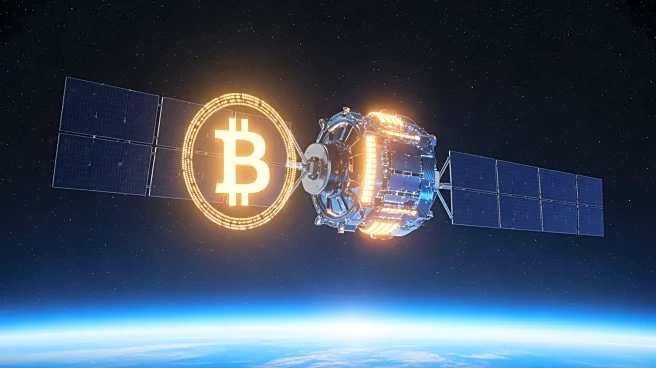
Starcloud, a U.S.-based space infrastructure company, has announced plans to start Bitcoin mining in space by the end of 2026. The company, formerly known as Lumen Orbit, intends to deploy mining-specific hardware on its second satellite, Starcloud-2.
This initiative is part of a broader trend to establish space-based data centers and leverage the unique conditions of space for high-performance computing tasks. Starcloud's first satellite, Starcloud-1, was launched as a demonstrator for data-center-class computing in space, aiming to validate the feasibility of conducting high-end GPU operations in an orbital environment. The company believes that the abundant solar energy and the cold vacuum of space can enhance the economics of Bitcoin mining by reducing the land, grid, and cooling constraints faced by Earth-based facilities.
Why It's Important?
This development is significant as it represents a novel approach to Bitcoin mining, which is traditionally energy-intensive and environmentally scrutinized. By moving operations to space, Starcloud aims to capitalize on continuous solar power and efficient cooling, potentially reducing the environmental impact and operational costs associated with terrestrial mining. This move could influence how digital infrastructure is developed and managed, offering a new model for energy allocation in the tech industry. For investors, this represents an innovative venture into space-based computing, potentially reshaping perceptions of stranded energy and off-grid computing solutions. Additionally, it highlights the growing interest in commercializing space infrastructure, with implications for energy policy, space regulation, and data center operations.
What's Next?
Starcloud's next steps involve launching the Starcloud-2 satellite and demonstrating the viability of its space-based Bitcoin mining operations. The company must overcome significant technical challenges, including ensuring hardware durability in space and managing the costs associated with launching and operating satellites. Success in this venture could pave the way for further investment in orbital data centers and influence future strategies for digital infrastructure development. Stakeholders such as energy policymakers, space regulators, and data center operators will be closely monitoring the outcomes of this experiment to assess its feasibility and potential impact on their respective fields.
Beyond the Headlines
The implications of space-based Bitcoin mining extend beyond immediate commercial interests. This initiative could set a precedent for how space is utilized for commercial purposes, raising questions about orbital congestion, debris mitigation, and the environmental impact of increased satellite launches. It also challenges traditional notions of data center operations, potentially leading to innovations in cooling, power architecture, and modular compute design. As more companies explore space-based solutions, the regulatory landscape will need to adapt to address these emerging challenges and opportunities.