








What's Happening?
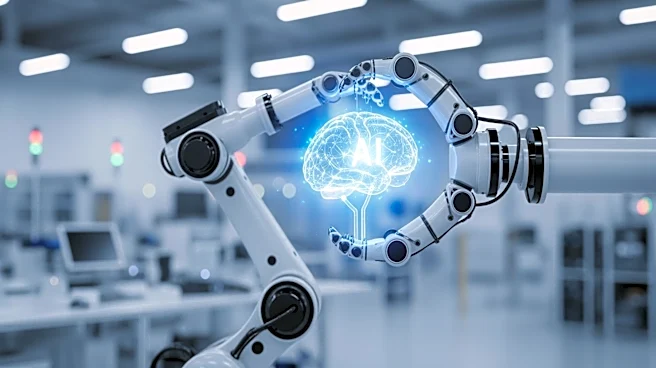
Honeywell CEO Vimal Kapur has emphasized the transformative potential of AI in redefining automation, particularly as labor shortages become more pronounced. Speaking on CNBC's 'Mad Money,' Kapur outlined how AI is enhancing Honeywell's automation capabilities,
which span various sectors including hospitals, airports, and data centers. The company is set to spin off its aerospace business, focusing solely on automation. Kapur noted that AI's ability to process vast amounts of operational data can optimize decision-making and automate tasks, addressing the growing challenge of finding skilled workers.
Why It's Important?
The integration of AI into automation systems is crucial as industries face increasing labor shortages. By leveraging AI, companies like Honeywell can maintain productivity and efficiency despite a shrinking workforce. This shift not only addresses immediate operational challenges but also positions companies to capitalize on new revenue opportunities. As AI continues to evolve, it could redefine industry standards, making automation more intelligent and responsive. Honeywell's strategic focus on automation highlights the broader trend of companies adapting to technological advancements to sustain growth and competitiveness.
What's Next?
As Honeywell completes its transition to a pure-play automation company, it is likely to further develop AI-driven solutions that enhance operational efficiency across various sectors. This could lead to increased collaboration with other tech firms and industries seeking to integrate AI into their operations. Additionally, as AI becomes more prevalent, there may be regulatory and ethical considerations regarding its implementation, prompting discussions on best practices and standards. Honeywell's continued investment in AI could also influence other companies to prioritize similar technological advancements.