







What's Happening?
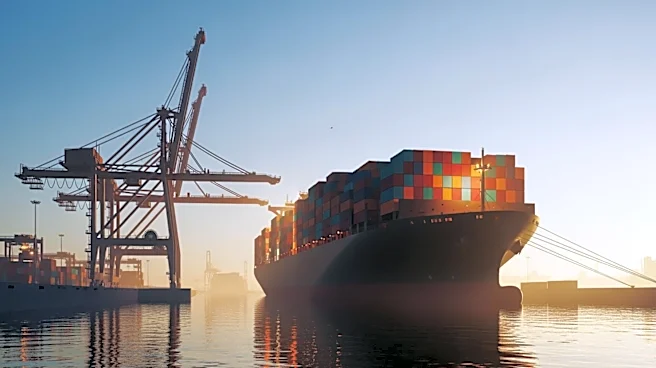
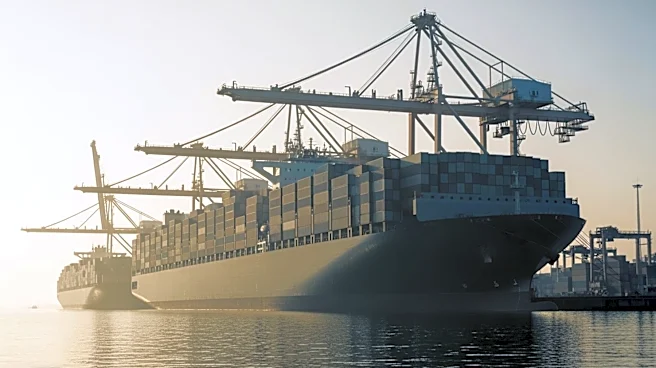
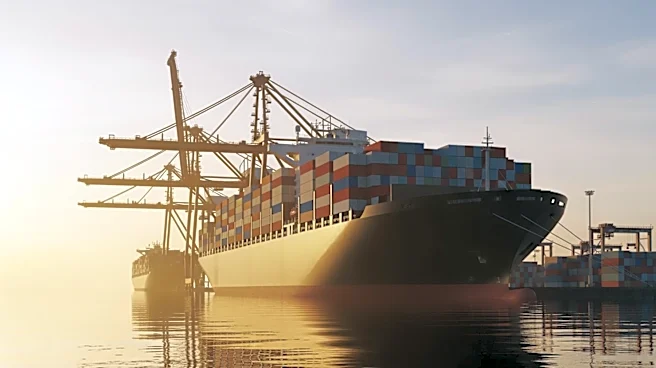
Port Tampa Bay recently received the Zim Canada, a container vessel that set a new record for carrying capacity at the port. The ship, which docked on April 9, 2026, carries 11,900 twenty-foot equivalent units (TEUs), surpassing previous records by nearly
2,000 TEUs. This arrival underscores the port's growing capacity to handle larger vessels and highlights ongoing infrastructure investments. The port is set to receive $10 million in federal funding for the Tampa Harbor Navigation Improvement Project, which will support planning, engineering, and design efforts. This project, expected to be completed by 2034, will proceed in six phases. Additionally, the port is preparing for expanded crane capabilities, with six post-Panamax cranes expected to be operational by the end of 2026. Port Tampa Bay, Florida's largest and most diversified seaport, handled 32 million tons of cargo in fiscal year 2025, with container volumes increasing by over 300% since 2018.
Why It's Important?
The arrival of the Zim Canada at Port Tampa Bay marks a significant milestone in the port's expansion efforts, reflecting its growing role in global shipping. The port's ability to accommodate larger vessels is crucial for maintaining its competitive edge and supporting Florida's economy. The federal funding for the Tampa Harbor Navigation Improvement Project will enhance the port's infrastructure, enabling it to handle deeper-draft vessels and increase cargo capacity. This expansion is vital for the port's continued growth, as it handles a significant portion of Florida's gas and jet fuel. The port's development also supports the cruise industry, with a record 1.66 million passengers in 2025, and projections of 1.8 million in 2026. These developments are expected to boost economic activity in the region, benefiting local businesses and creating jobs.
What's Next?
Port Tampa Bay is set to begin construction on its largest project in history, the deepening of the shipping channel from 43 feet to 47 feet, in 2027. This $1.3 billion project will extend the entrance channel by 1.9 miles and improve access for larger vessels. The port is also exploring options for a new cruise terminal location after legislation blocked a proposed terminal in Manatee County. These efforts are part of a broader strategy to enhance the port's capabilities and support its growth as a major hub for cargo and cruise operations. Stakeholders, including local businesses and government officials, will likely continue to support these initiatives to ensure the port's long-term success.