

What's Happening?
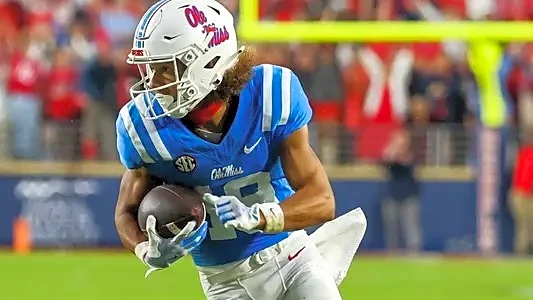
Deuce Knight, a former five-star quarterback recruit who transferred from Auburn to Ole Miss, faces unexpected challenges in his quest to become the starting quarterback for the Rebels. Knight, who was ranked as the No. 8 quarterback in the transfer portal by 247 Sports, anticipated taking over the starting role for Ole Miss in 2026. However, Trinidad Chambliss, the current starting quarterback, has been granted an extra year of eligibility by a Mississippi state court. Chambliss had an impressive 2025 season, finishing with 3,937 passing yards, 22 touchdowns, and only three interceptions, alongside 527 rushing yards and eight rushing touchdowns. This development has led Knight to remove references to Ole Miss Football from his social media
profiles, indicating potential dissatisfaction with the situation.
Why It's Important?
The situation at Ole Miss highlights the complexities and uncertainties faced by college athletes in the transfer portal era, especially with the added dimension of Name, Image, and Likeness (NIL) considerations. For Knight, the unexpected return of Chambliss could mean another year on the bench, impacting his development and future prospects. This scenario underscores the competitive nature of college football, where even highly-touted recruits must navigate unexpected challenges. For Ole Miss, retaining Chambliss provides stability and experience at the quarterback position, which could be crucial for their aspirations in the upcoming season. However, it also raises questions about player management and the potential for internal team dynamics to affect performance.
What's Next?
As the 2026 season approaches, Ole Miss will need to manage the quarterback situation carefully. While Chambliss is likely to retain the starting position, Knight's potential and desire for playing time could lead to further developments, such as a possible transfer if he remains unsatisfied. The coaching staff may also consider giving Knight opportunities to play in certain situations to keep him engaged and develop his skills for future seasons. The outcome of this situation could influence how other programs handle similar scenarios, particularly in balancing the needs of current starters with the development of future talent.