



What's Happening?
The fashion industry is experiencing significant shifts in how trends are disseminated from high fashion to retail. Historically, trends would trickle down from luxury brands to more affordable retailers, a process famously depicted in the 2006 film 'The
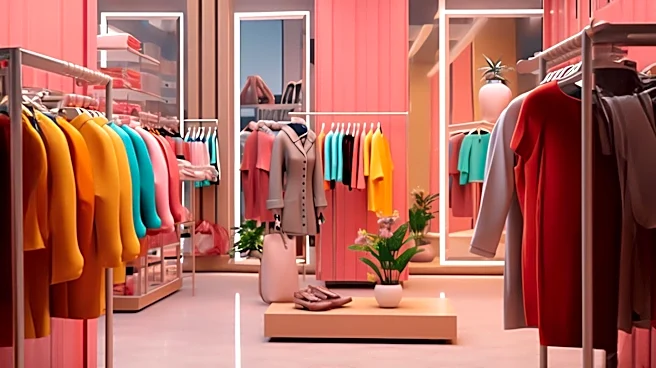
Devil Wears Prada.' However, the advent of the internet and social media has accelerated this process, allowing trends to spread at unprecedented speeds. High-fashion designers, traditionally inspired by theater, architecture, and global events, are now also influenced by the need for rapid sales growth, often driven by large conglomerates like LVMH and Kering. This has led to a culture of sameness and a reliance on artificial intelligence for market predictions. Meanwhile, fast fashion brands like Zara and H&M have capitalized on this speed, often producing designer 'dupes' faster than the originals can reach the market. This rapid cycle is further complicated by the lack of copyright protection for clothing designs in the U.S., allowing brands to make minor changes to avoid legal issues.
Why It's Important?
The rapid dissemination of fashion trends has significant implications for both the industry and consumers. For high-fashion brands, the pressure to continuously innovate and maintain exclusivity is mounting, as fast fashion brands quickly replicate their designs. This not only affects the creative process but also impacts the economic model of luxury brands, which rely heavily on maintaining a high-end image while generating revenue from mass-market sales. For consumers, the fast-paced trend cycle can lead to overconsumption and a focus on quantity over quality. Additionally, the environmental impact of fast fashion, characterized by its quick turnover and disposable nature, raises concerns about sustainability. The industry's reliance on AI for trend prediction also highlights a shift towards data-driven decision-making, potentially at the expense of creativity and authenticity.
What's Next?
As the fashion industry continues to evolve, several potential developments could shape its future. High-fashion brands may increasingly collaborate with fast fashion retailers to reach a broader audience while maintaining their exclusive image. This trend of high-low collaborations, pioneered by brands like Target, could become more prevalent. Additionally, there may be a push for stronger intellectual property protections for fashion designs to combat the rapid production of dupes. The industry's focus on sustainability is also likely to grow, with brands exploring more eco-friendly production methods and materials. Consumers' increasing awareness of environmental issues may drive demand for sustainable fashion, influencing how brands approach design and production.
Beyond the Headlines
The current dynamics in the fashion industry reflect broader cultural and economic shifts. The democratization of fashion through the internet and social media has empowered consumers, allowing them to influence trends and demand more from brands. This shift challenges traditional notions of exclusivity and luxury, as consumers prioritize values like sustainability and authenticity. The reliance on AI and data analytics in fashion also raises questions about the role of human creativity in an increasingly automated industry. As brands navigate these changes, they must balance the need for innovation with the preservation of their unique identities and heritage.