



What's Happening?
Raytheon Technologies has been awarded a $183.68 million contract to supply new kit hardware and related services for the Patriot missile system program in the United Arab Emirates (UAE). This contract, which is part of a larger $281.15 million agreement,
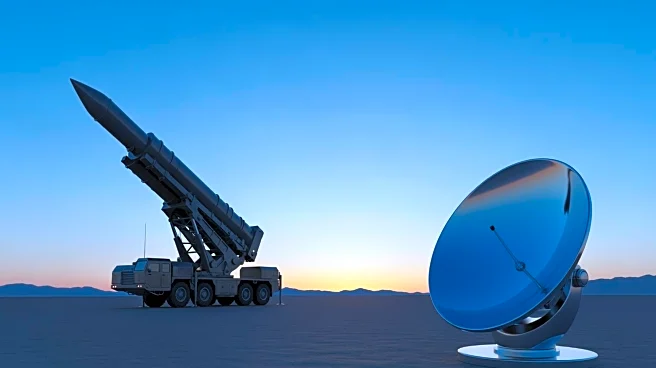
comes at a time of increased regional conflict involving Iran. The Patriot system, produced by Raytheon and Lockheed Martin, is designed to counter tactical ballistic missiles, cruise missiles, and advanced aircraft. The UAE's acquisition of the Patriot system dates back to a request made in December 2007, with the initial contract awarded in December 2008. The recent contract award follows reports of increased efforts by Gulf countries, including the UAE, to bolster their air defense capabilities in response to missile and drone attacks linked to Iran.
Why It's Important?
The contract highlights the ongoing geopolitical tensions in the Middle East, particularly involving Iran, and underscores the strategic importance of advanced air defense systems like the Patriot. For Raytheon, this contract not only strengthens its position in the defense sector but also reflects the growing demand for military technology in volatile regions. The UAE's investment in the Patriot system is a significant step in enhancing its national security and defense capabilities. This development also has implications for U.S. foreign policy and defense strategy, as it involves the sale of advanced military technology to a key ally in a region marked by instability.
What's Next?
The work under this contract will be carried out in Tewksbury, Massachusetts, with completion expected by March 2031. As the geopolitical situation in the Middle East evolves, further contracts and collaborations between the U.S. and its allies in the region may be anticipated. The UAE and other Gulf countries may continue to seek advanced defense systems to counter perceived threats, potentially leading to more defense deals with U.S. companies. Additionally, the U.S. Department of Defense will likely continue to monitor and support its allies in the region to maintain stability and security.