
What's Happening?
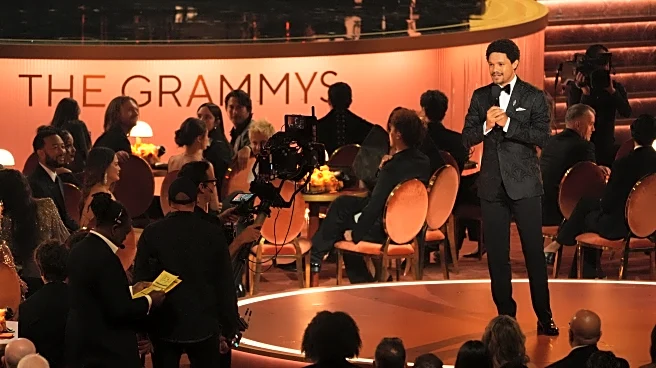
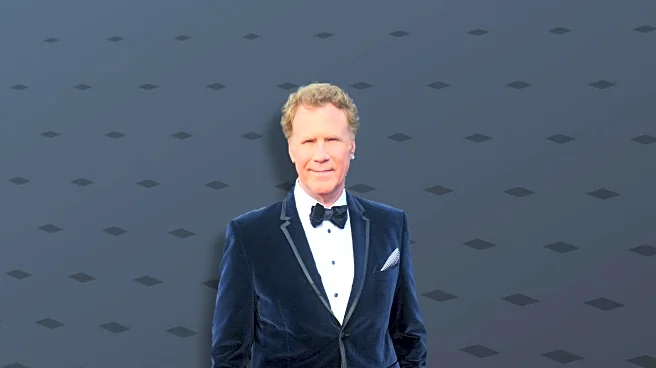
The 2026 awards season has seen a significant shift in men's fashion on the red carpet, moving away from traditional black tuxedos to more daring and expressive styles. At recent events like the Critics
Choice Awards and the Grammys, male celebrities have embraced bold colors, unique tailoring, and unconventional accessories. Notable examples include Ethan Hawke's blue Bode suit with floral embroidery and Bad Bunny's black velvet Schiaparelli suit with corset lacing. This trend reflects a broader acceptance of gender fluidity in fashion, as male stars experiment with styles that challenge traditional masculinity. The menswear market has grown significantly, with brands eager to design eye-catching pieces for male celebrities who can influence consumer trends.
Why It's Important?
The evolution of men's red carpet fashion signifies a cultural shift towards more inclusive and diverse expressions of masculinity. As male celebrities adopt styles that incorporate traditionally feminine elements, they challenge societal norms and contribute to a broader dialogue about gender identity and expression. This trend also impacts the fashion industry economically, as brands expand their offerings to cater to a more diverse clientele. The visibility of these styles on high-profile platforms like the red carpet can influence consumer behavior, encouraging more men to explore fashion beyond conventional boundaries. This shift may also lead to increased opportunities for male celebrities to become brand ambassadors, further blurring the lines between fashion and celebrity culture.
Beyond the Headlines
The changing landscape of men's fashion on the red carpet reflects deeper societal changes regarding gender norms and identity. As public figures embrace more fluid expressions of masculinity, they contribute to a cultural environment that values diversity and inclusivity. This trend may inspire younger generations to feel more comfortable expressing their identities through fashion, potentially leading to long-term shifts in societal attitudes towards gender. Additionally, the fashion industry's response to these changes could drive innovation and creativity, as designers explore new ways to blend traditional and contemporary styles.