


What's Happening?
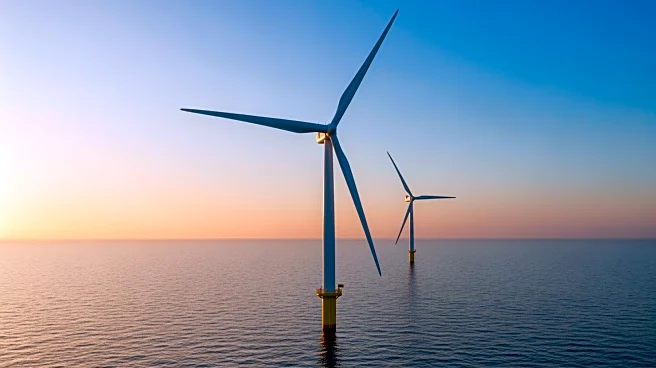
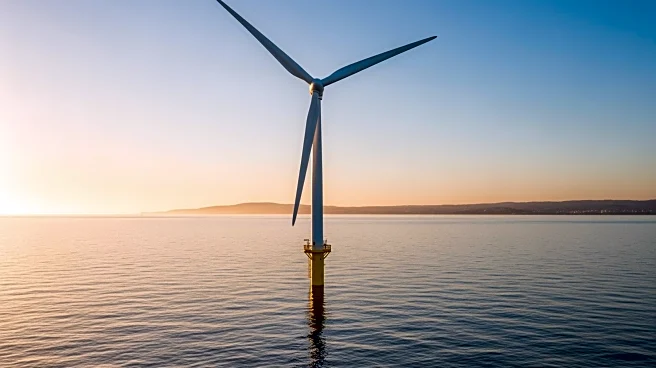
The Revolution Wind offshore wind energy project has begun delivering power to the Connecticut energy grid. This development comes after the Trump Administration attempted to halt the construction of the wind turbines, citing national security concerns.
The project, a joint venture between Ørsted and Skyborn Renewables, is expected to supply electricity to over 350,000 homes and businesses. A federal court injunction allowed the project to proceed, countering the administration's freeze. The wind farm is part of a broader effort to increase renewable energy sources in New England, aiming to reduce energy costs and reliance on fossil fuels.
Why It's Important?
The successful launch of the Revolution Wind project marks a significant step in the U.S. transition towards renewable energy. It highlights the ongoing tension between fossil fuel interests and renewable energy advocates. The project's ability to provide cheaper, locally generated power could lead to substantial savings for consumers and reduce dependency on volatile global energy markets. This development also reflects a shift in energy policy under different administrations, with the Biden administration supporting renewable projects that the previous administration opposed. The project's success could encourage further investment in renewable energy infrastructure across the U.S.
What's Next?
As the Revolution Wind project begins operations, it sets a precedent for future renewable energy projects in the U.S. The project's success may lead to increased political and public support for similar initiatives, potentially influencing energy policy and regulatory frameworks. Stakeholders, including environmental groups and energy companies, will likely monitor the project's impact on energy prices and grid reliability. Additionally, the project's progress could prompt further legal and political debates over the balance between national security concerns and the push for renewable energy development.