


What's Happening?
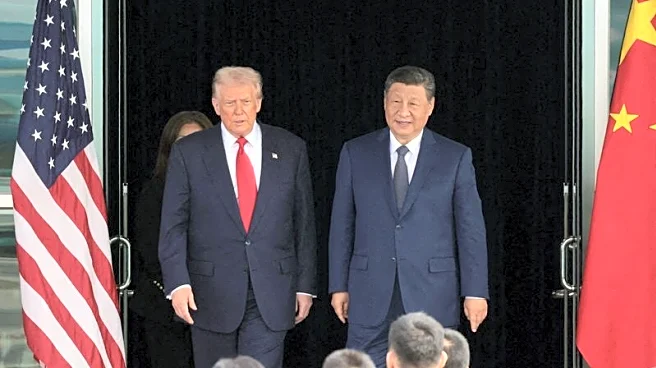
Netflix co-CEO Ted Sarandos has engaged in discussions with President Trump, urging him to reconsider the imposition of tariffs on foreign-made films and TV shows. Sarandos argues that such tariffs are not the optimal solution for boosting U.S. movie
and TV production. Instead, he advocates for tax incentives as a more effective strategy to attract production back to the United States. President Trump has previously expressed interest in implementing a 100% tariff on films produced outside the U.S. as a means to counteract the decline in domestic production, particularly in Hollywood. This decline has been exacerbated by international filming hubs like London, which offer significant cost-saving incentives. Sarandos believes that adopting similar incentive programs in the U.S. could reverse this trend and has communicated these views in an interview with POLITICO.
Why It's Important?
The potential imposition of tariffs on foreign films could have significant implications for the U.S. entertainment industry, particularly for companies like Netflix that have a global content strategy. Tariffs could increase costs for Netflix, which relies on international productions to diversify its offerings and appeal to a global audience. By advocating for tax incentives instead, Sarandos is highlighting a strategy that could revitalize domestic production without the negative financial impact of tariffs. This approach could benefit U.S. states that have already seen success with incentive programs, such as Georgia and New Jersey, potentially leading to increased job creation and economic activity in these areas. The decision on whether to implement tariffs or incentives will have lasting effects on the competitive landscape of the global film industry.
What's Next?
The White House has not yet made a final decision on the implementation of foreign film tariffs, and discussions are ongoing. The administration is exploring various options to fulfill President Trump's directive to enhance national and economic security while supporting the U.S. film industry. If tax incentives are adopted, it could lead to a shift in production dynamics, with more projects potentially returning to the U.S. This decision will likely involve input from industry stakeholders, including film studios, production companies, and state governments, who may advocate for policies that best support their economic interests.