






What's Happening?
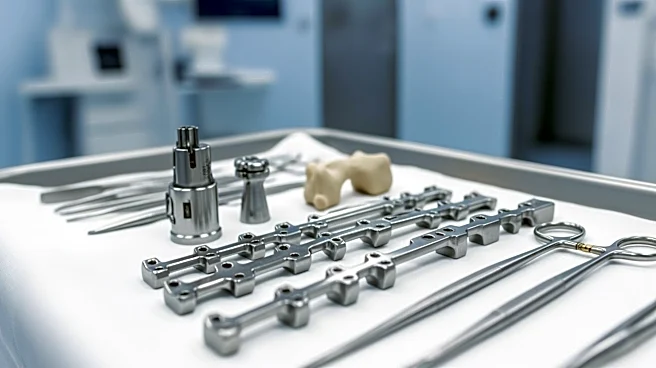
Advita Ortho, a leader in medical technology, has announced the first clinical use of its Equinoxe Scapula Reconstruction System. This system is specifically designed to address complex acromial and scapular spine fractures, including those associated
with reverse shoulder arthroplasty. The surgeries were conducted by Dr. Michael McKee and Dr. Peter Cole, who are part of the design team. The system aims to provide a dedicated solution for these challenging fractures, which have historically been difficult to treat due to limited established options. The Equinoxe system features low-profile, anatomically pre-contoured implants that fit the anterior and lateral acromion, minimizing disruption to the deltoid. It includes specialized plate configurations to support the scapula and provide multiplanar fixation, reducing the need for intraoperative bending.
Why It's Important?
The introduction of the Equinoxe Scapula Reconstruction System is significant as it addresses a critical gap in orthopedic surgery, particularly for patients undergoing reverse shoulder arthroplasty. These fractures, though rare, can lead to severe complications post-surgery. By providing a system specifically designed for these fracture patterns, Advita Ortho is enhancing the ability of surgeons to manage these cases more effectively. This advancement not only improves surgical outcomes but also enhances patient recovery and quality of life. The system's design, which incorporates biomechanics-driven innovation, represents a major step forward in orthopedic care, potentially setting a new standard for treating complex shoulder fractures.
What's Next?
Advita Ortho plans to expand the availability of the Equinoxe Scapula Reconstruction System as part of its commitment to advancing orthopedic innovation. As the system becomes more widely available, it is expected to be adopted by more surgeons, potentially leading to improved treatment outcomes for patients with complex shoulder fractures. The company will likely continue to collaborate with medical professionals to refine and enhance the system based on clinical feedback. This could also lead to further innovations in orthopedic solutions, driven by data, artificial intelligence, and machine learning.