


What's Happening?
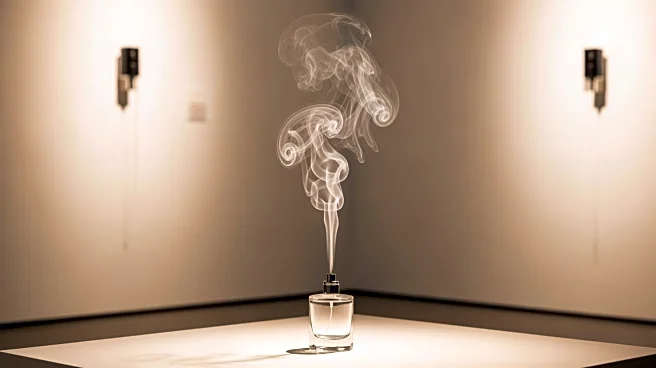
The art world is increasingly embracing scent as a medium of communication, with artists and museums exploring its potential to convey complex concepts and evoke emotional responses. This trend is highlighted by the work of artists like Sissel Tolaas, who has developed a lexicon for describing scents, and Delcy Morelos, whose exhibition 'Madre' at Berlin's Hamburger Bahnhof uses materials like hay and cinnamon to create a sensory experience. The Kunstpalast Düsseldorf's exhibition 'The Secret Power of Scents' further exemplifies this trend by incorporating scents into its displays, allowing visitors to engage with art on a multisensory level. These developments mark a shift from traditional visual-centric art experiences to more holistic, embodied
interactions.
Why It's Important?
The integration of scent into art exhibitions represents a significant shift in how art is experienced and understood. By engaging multiple senses, these exhibitions challenge the traditional dominance of sight in art appreciation and open new pathways for interpretation. This approach can deepen audience engagement, making art more accessible and memorable. It also reflects broader cultural trends towards multisensory experiences and the recognition of scent as a powerful tool for communication and memory. As museums and artists continue to explore this medium, it could lead to innovative practices in art curation and education, potentially transforming the art world and its audiences.