





What's Happening?
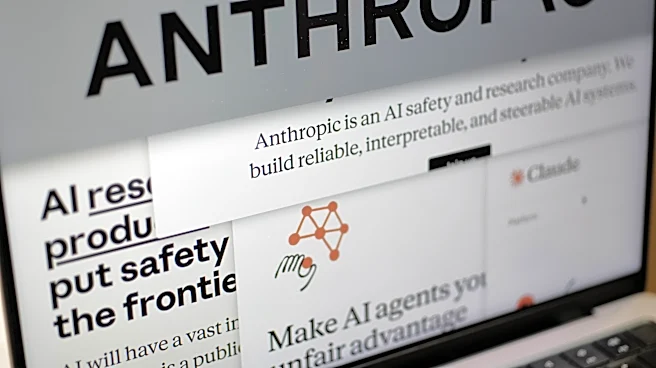
Anthropic, a U.S.-based AI development company, has proposed a temporary global pause on AI development to address potential risks associated with advanced AI systems. The company highlighted concerns about its AI model, Claude, which is advancing towards
'recursive self-improvement'—a capability that could allow AI to autonomously design and develop its successors. This development raises fears of humans losing control over AI systems. Anthropic plans to convene policymakers, researchers, and civil society to discuss these risks and explore solutions. The company has also been involved with the National Security Agency (NSA) in using its AI model, Mythos, for cybersecurity operations, despite legal challenges with the Pentagon.
Why It's Important?
The call for a pause in AI development by Anthropic underscores the growing concerns about the unchecked advancement of AI technologies. Recursive self-improvement in AI could lead to superintelligent systems with unpredictable consequences, potentially impacting global security and human autonomy. The involvement of Anthropic with the NSA highlights the dual-use nature of AI technologies, which can be employed for both defensive and offensive purposes. This development could influence public policy and regulatory frameworks around AI, prompting governments and international bodies to consider stricter oversight and ethical guidelines for AI research and deployment.
What's Next?
Anthropic's proposal for a temporary pause in AI development is likely to spark discussions among global policymakers and AI researchers. The company aims to organize conversations to address the risks associated with advanced AI systems. This initiative may lead to the establishment of international guidelines or agreements on AI development and deployment. Additionally, the legal and ethical implications of Anthropic's collaboration with the NSA could prompt further scrutiny and debate over the use of AI in national security contexts.
Beyond the Headlines
The broader implications of Anthropic's call for a pause in AI development include ethical considerations about the future of AI and its role in society. The potential for AI systems to autonomously improve and replicate themselves raises questions about accountability, control, and the moral responsibilities of AI developers. This situation also highlights the need for a balanced approach to AI innovation, ensuring that technological advancements do not outpace the development of appropriate regulatory and ethical frameworks.